Looking for a reliable pvc cable manufacturer in China for a low-voltage power distribution project? The right low voltage power cable manufacturer should be able to supply commonly used 0.6/1kV PVC insulated cable specifications, review project-specific requirements, and clarify the applicable standards before production.
Huanghe Cable manufactures commonly used low-voltage PVC cable models and supports customized production according to project requirements. Buyers can discuss copper conductors (solid, stranded, or flexible) or aluminum conductors (solid or stranded), single-core or multicore constructions, different conductor cross-sections, armoured designs, and specified flame-retardant requirements, subject to the applicable product standard and confirmed design.
This article introduces common Chinese PVC cable designations, overseas model references, typical core configurations and conductor sizes, armour options, fire-performance requirements, and the information needed to request a quotation from a manufacturer.
Looking for a PVC Cable Manufacturer?
Huanghe can discuss commonly used low-voltage PVC power cable models and customized specifications. Send your cable schedule, BOQ, model list, or technical requirements for review.
For low-voltage power distribution, select the manufacturer based on the required cable construction, rated voltage, conductor, installation conditions, and governing standard.
PVC-insulated power cables are used in many low-voltage distribution applications, including commercial buildings, industrial facilities, infrastructure projects, and power distribution networks. Depending on the specification, a cable may have a copper or aluminum conductor, one or more cores, PVC insulation, a PVC outer sheath, and additional mechanical protection.
International buyers may use different model codes for cables with broadly similar purposes. A Chinese project may specify a VV or VLV cable, while a German-standard project may refer to NYY or NAYY. These names are useful starting points for communication, but the complete cable design and applicable standard must be checked before a quotation or substitution is approved.
As a direct pvc power cable manufacturer with decades of experience, Huanghe Cable was established in 1980 and supplies industrial projects worldwide. Whether you are looking for a standard pvc cable supplier or custom manufacturing, the company helps buyers clarify the required construction before placing an order.
Use cable model codes to identify a likely product category, then confirm conductor material, insulation, sheath, armour, voltage rating, and standard before treating two products as comparable.
The following Chinese designations are commonly encountered in low-voltage PVC power cable sourcing. The table also gives examples of overseas designations that buyers may encounter. The overseas names are references for product identification—not declarations that the cables are technically equivalent.
| Chinese model or family | General construction | Overseas reference to investigate | Important qualification |
|---|---|---|---|
| VV | Copper conductor, PVC insulation, PVC sheath | German NYY may be a useful initial comparison for a PVC-insulated and PVC-sheathed 0.6/1 kV power cable | Verify the applicable standard, conductor class, dimensions, voltage rating, and construction details. |
| VLV | Aluminum conductor, PVC insulation, PVC sheath | German NAYY is a reference worth checking for aluminum-conductor PVC power cable requirements | Do not assume the conductor dimensions, electrical resistance, or full cable construction are identical. |
| VV22 | Copper conductor, PVC insulation, steel tape armour, PVC sheath | A specified armoured 0.6/1 kV power cable under the destination market’s standard | NYY alone should not be used as an armour-equivalent designation. Confirm the required armour type and standard. |
| VLV22 | Aluminum conductor, PVC insulation, steel tape armour, PVC sheath | A specified armoured aluminum-conductor power cable | Confirm armour construction, conductor requirements, and installation conditions independently. |
| VV32 / VLV32 | PVC power cable family with steel wire armour, depending on the specified construction | A cable specified with steel wire armour under the required standard | Confirm the exact model definition, armour construction, and application. Do not select by suffix alone. |
| ZR-VV / ZR-VLV | Flame-retardant variants of the relevant PVC cable family, where specified | A flame-retardant cable tested to the required IEC, EN, or local specification | The flame-retardant category and test requirements must be stated. The prefix alone does not establish performance equivalence. |
| ZR-VV22 / ZR-VLV22 | Flame-retardant variants of the corresponding armoured PVC cable family, where specified | A flame-retardant armoured power cable defined by the project specification | Confirm both the armour construction and the required flame test classification. |
In the German market, NYY is used for PVC-insulated, PVC-sheathed power cable under the relevant German cable standard, while NAYY is associated with an aluminum-conductor version. These designations are useful when discussing a project, but the exact product specification must still be checked against the relevant standard and the manufacturer’s datasheet.
For international projects, it is better to send the complete model code and standard number than to ask a supplier to quote a short code in isolation. This is especially important when the project uses national cable designations or requires a specific conductor class, sheath material, armour construction, or fire-performance classification.
Model code not familiar to your supplier?
Send the original model designation, standard number, or cable datasheet. Huanghe can review the requested construction and discuss an appropriate manufacturing specification before quotation.
Core count and conductor cross-section should follow the electrical design and applicable cable standard; not every core-count and size combination is available or suitable for every construction.
Low-voltage PVC power cables are supplied in a range of conductor sizes and core configurations. Buyers may require a single-core cable for a particular distribution arrangement, a multicore cable for a feeder, or different combinations for a project BOQ. The actual selection depends on load, installation method, protective-device coordination, voltage drop, short-circuit requirements, and the governing design rules.
| Configuration | Typical description | What to specify |
|---|---|---|
| 1-core | One insulated conductor per cable | Conductor size, number of runs, installation arrangement, and whether armour is permitted or required. |
| 2-core | Two insulated conductors | Circuit purpose, conductor identification, and required voltage rating. |
| 3-core | Three insulated conductors | Phase or circuit arrangement, conductor size, and installation requirements. |
| 4-core | Four insulated conductors | Whether the conductors have equal or specified cross-sections, including any reduced neutral conductor. |
| 5-core | Five insulated conductors | Required phase, neutral, and protective conductor arrangement and identification. |
| 3+1 / other unequal-core designs | Three main conductors plus a conductor with a separately specified cross-section, where applicable | State the cross-section of every core explicitly; do not rely on the configuration label alone. |
For low-voltage cable inquiries, buyers may encounter conductor cross-sections such as those listed below. This is a reference list of commonly used nominal sizes, not a promise that every size can be combined with every core count, armour, or standard. The available construction should be confirmed against the order requirements.
The final cable size should not be selected by copying another project’s specification without checking the load and installation conditions. Current-carrying capacity, ambient temperature, grouping, installation method, voltage drop, and fault-current requirements may affect the appropriate conductor size.
Huanghe can discuss common low-voltage PVC cable sizes and core arrangements, as well as customized combinations required by a project. For multiple cable models, sending the BOQ or cable schedule is usually more efficient than requesting each item separately.
Armour should be selected according to the installation route and required mechanical protection, not simply because an armoured cable is assumed to be more suitable for every project.
PVC power cables can be specified with or without metallic armour. An unarmoured cable may be suitable where the installation design provides the necessary protection. An armoured construction may be required where the cable route, burial method, or project specification calls for additional mechanical protection.
| Construction | General description | What buyers should confirm |
|---|---|---|
| Unarmoured PVC cable | PVC insulation and sheath without metallic armour | Installation method, external protection, and any project restrictions. |
| Steel tape armoured PVC cable | A cable design incorporating steel tape armour | Required armour material, construction, sheath, and applicable standard. |
| Steel wire armoured PVC cable | A cable design incorporating steel wire armour | Specified wire armour construction, cable route, bending requirements, and termination arrangement. |
In Chinese model families, VV22 and VLV22 are common examples associated with steel tape armoured PVC power cables, while VV32 and VLV32 are examples associated with steel wire armoured variants. The full designation and construction must still be confirmed against the relevant product standard.
Armour is not a substitute for proper cable sizing, installation design, or protective-device coordination. For an underground installation, buyers should also confirm the installation method, soil and environmental conditions, pulling requirements, and any project-specific requirements for the outer sheath.
For a more detailed discussion of armour-related specifications, see Armoured Power Cable Datasheet and How to Specify Underground Armoured Power Cables.
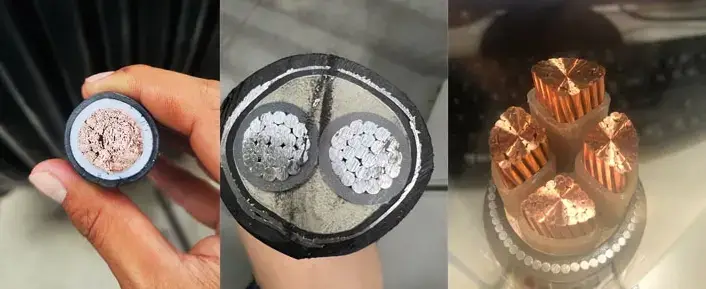
Flame retardance, fire resistance, and low-smoke or halogen-free performance are different properties; specify the required performance and test standard rather than relying on a product label alone.
Some low-voltage PVC cable projects require flame-retardant performance in addition to the basic electrical and mechanical requirements. Other projects require circuit integrity during fire, reduced smoke, or halogen-free materials. These requirements are not interchangeable and should be stated separately in the project specification.
| Requirement | What it addresses | What to specify |
|---|---|---|
| Flame-retardant cable | Limiting flame propagation under the conditions of a specified test | Required standard, test method, and classification or category where applicable. |
| Fire-resistant cable | Maintaining the required circuit function during specified fire conditions | Required circuit-integrity test, duration, conditions, and project standard. |
| Low-smoke cable | Limiting smoke emission under the specified test method | Required smoke test and acceptance criteria. |
| Halogen-free cable | Limiting halogen content or corrosive gas emissions according to the specified requirements | Required material properties and applicable gas-emission or halogen test methods. |
In Chinese model descriptions, prefixes such as ZR may be used for flame-retardant variants. However, the exact designation and performance requirements depend on the applicable standard and product specification. A prefix alone is not sufficient evidence that a cable meets a particular IEC, EN, or local fire classification.
For example, IEC 60332-1-2 specifies a test method for vertical flame propagation on a single insulated wire or cable, while the IEC 60332-3 series addresses vertical flame spread for vertically mounted groups of cables. Passing a single-cable test does not automatically establish compliance with a grouped-cable test requirement. The project specification must identify which test is required. See the official references for IEC 60332-1-2:2025 and IEC 60332-3-22:2018.
If a project requires fire resistance, do not assume that a flame-retardant PVC cable is an automatic substitute. Similarly, a low-smoke or halogen-free requirement should not be assumed to follow from the words “flame retardant.” Each property should be confirmed separately with the manufacturer.
The correct standard depends on the cable’s rated voltage, construction, destination market, and project specification; model codes alone do not prove compliance.
PVC power cables may be specified to Chinese GB standards, IEC standards, German DIN/VDE standards, or other national and project-specific requirements. These standards define different aspects of the product, such as construction, dimensions, materials, tests, and performance. They should not be treated as interchangeable simply because two cables have a similar name.
| Standard reference | How it may be relevant | What buyers should check |
|---|---|---|
| GB/T 12706.1-2020 | Chinese standard for power cables with extruded insulation and rated voltages of 1 kV and 3 kV within the scope of Part 1 | Confirm the cable type, rated voltage, construction, and current applicable standard requirements. |
| IEC 60502-1:2021 | International standard covering specified power cables with extruded insulation for rated voltages of 1 kV and 3 kV | Verify the exact insulation type, voltage designation, construction, and required tests. |
| DIN VDE / HD 603 references | Relevant German or harmonized cable specifications, depending on cable type and application | Confirm the exact part, edition, voltage rating, and model designation required by the project. |
| IEC 60332 series | Fire-condition test methods for flame propagation, depending on the specific part | Identify the required test part and performance criteria; do not infer compliance from the cable name. |
For official scope information, consult the relevant standard publisher, including the Chinese national standard listing for GB/T 12706.1-2020 and the IEC 60502-1:2021 publication page.
A project may also specify requirements beyond the basic product standard, such as a particular flame test, third-party inspection, cable marking, packaging, or documentation. Include those requirements in the inquiry so they can be reviewed before production.
Before placing an order, establish who is responsible for technical review, production coordination, quality documentation, and confirming the final cable specification.
A trading supplier may be appropriate for some purchasing arrangements. Direct cooperation with a manufacturer can be useful when an order includes multiple cable models, customized construction, or detailed coordination between the specification and the delivered product. The key is to understand the supplier’s actual role and the responsibilities agreed for the order.
| What to confirm | Why it matters |
|---|---|
| Manufacturing responsibility | Clarifies who handles production planning and technical communication. |
| Product range and customization | Helps determine whether common and project-specific cable constructions can be discussed. |
| Specification review | Reduces the risk of quotations being based on incomplete or mismatched cable descriptions. |
| Quality documentation | Allows the buyer to check which test reports, inspection records, and certificates apply to the ordered cable. |
| Delivery and packaging | Clarifies cable lengths, drum requirements, marking, and logistics terms. |
Huanghe Cable was established in 1980 and manufactures cables for different power and industrial applications. Buyers can discuss PVC cable models, customized specifications, and project documentation directly with the team.
For a related explanation of supplier documentation, read How to Verify a Power Cable Test Certificate.
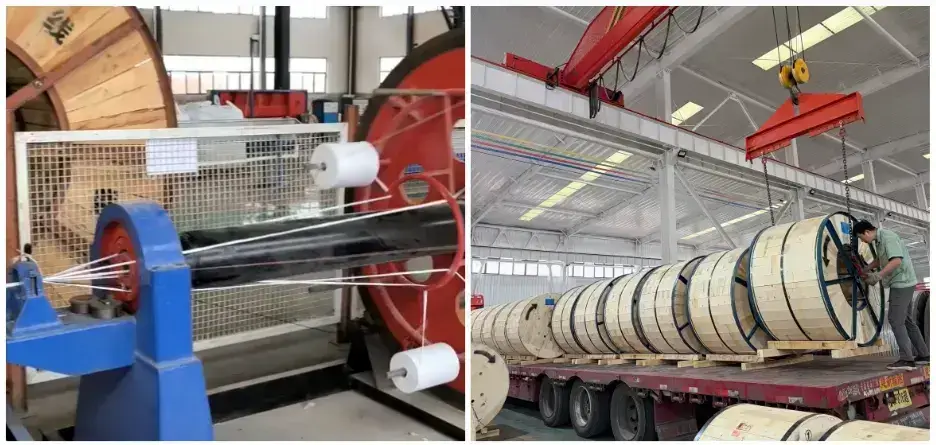
A useful quotation requires a defined cable construction and quantity; a short model name alone may not provide enough information for an accurate comparison.
PVC cable prices can vary according to conductor material, cross-section, number of cores, insulation and sheath requirements, armour, fire-performance requirements, applicable standards, quantity, and delivery terms. Two cables described as low-voltage PVC power cable may therefore have different specifications and prices.
For a more comparable quotation, provide as many of the following details as possible:
If your specification is incomplete, send the available information rather than guessing the missing parameters. A cable schedule, BOQ, drawing, or existing supplier datasheet can help clarify the required construction before a final quotation is prepared.
For additional background on PVC cable procurement and pricing considerations, see the existing PVC Power Cable Procurement Guide. This manufacturer-focused article is intended to help buyers identify a production partner and communicate the required cable design.
When a standard catalogue description does not fully match the project, define the required construction and performance criteria instead of assuming that a similar model is interchangeable.
Project cable schedules can contain several models, conductor sizes, core configurations, and installation requirements. A distributor may need different common sizes for its product range, while a contractor or EPC buyer may need the cable construction to match a particular project specification.
Huanghe can discuss customization based on the agreed design, including requirements such as:
The final manufacturing scope must be confirmed against the selected standard and technical specification. A customization request should identify the required performance and construction, not only the desired model name.
Have several PVC cable models in one project?
Send the complete BOQ or cable schedule. Huanghe can review the requested models, sizes, core configurations, armour, and applicable standards to help clarify the inquiry scope.

For a clearer quotation, provide your model list or project documents and identify any non-standard requirements at the inquiry stage.
Huanghe Cable can discuss commonly used low-voltage PVC power cable models and customized requirements for project supply. Whether you need a standard copper-conductor cable, an aluminum-conductor design, an armoured cable, or specified flame-retardant performance, the required construction should be confirmed before the quotation is finalized.
To help the team review your inquiry, include the following information where available:
If some details are not yet finalized, send the information you already have. The missing technical requirements can then be identified and clarified before the order is confirmed.
Looking for a PVC cable manufacturer in China for an LV distribution project? Share your pvc insulated power cable schedule, BOQ, or technical requirements with Huanghe Cable to discuss standard products and customized production with a leading low voltage power cable manufacturer.
Email: sales@huanghecables.com
Yes. Huanghe can manufacture commonly used low-voltage PVC cable models and specifications. The exact construction, rated voltage, applicable standard, and required performance should be confirmed against the project documents.
Yes. Customized requirements can be discussed for conductor material and size, core configuration, PVC insulation and sheath, armour, marking, and specified performance requirements. The final design and production scope must be confirmed before ordering.
No, Chinese VV and German NYY cables are not technically identical. While VV and NYY may be useful starting points for discussing PVC-insulated and PVC-sheathed power cables, the applicable standards, rated voltage, dimensions, conductor requirements, and tests must be checked before confirming equivalence or substitution.
In common Chinese cable designations, VV generally refers to a copper-conductor PVC-insulated and PVC-sheathed power cable, while VLV generally refers to an aluminum-conductor version. Confirm the complete designation and standard for the requested product.
Armoured PVC cable constructions can be specified where required. State the intended application and required armour type, then confirm the exact construction and applicable standard with the manufacturer.
Different core configurations and conductor sizes can be discussed according to the required product standard and design. Send a model list or BOQ so each combination can be reviewed and confirmed.
No, not by default. Flame retardance concerns limiting flame propagation under specified test conditions, while fire resistance concerns maintaining required function during defined fire exposure. Confirm the separate performance requirements and test standards in the project specification.
Provide the model or standard, rated voltage, conductor material and size, core configuration, armour and fire-performance requirements, quantity, destination, and required documents. A cable schedule, BOQ, or drawing is helpful for projects with multiple models.
You can send the standard number, model code, and technical datasheet for review. The required construction and compliance requirements should be confirmed before the product is quoted or treated as a substitute for another cable.
Technical note: Cable designations and standard requirements vary by market. Model references in this article are for preliminary identification only and should not be treated as automatic equivalence or approval for substitution. Confirm the final specification with the manufacturer and the project authority.

Please contact us for a free quotation by the below form. We promise the quickest response within 12 hours.