A cable quotation can look technically complete, and a supplier can provide a certificate with an IEC number on the cover, yet the documentation may still be insufficient for project approval. The key question is not simply “Does the supplier have a test certificate?” but “What exactly does this certificate prove about the cable we are buying?”
This distinction becomes particularly important for medium-voltage and armoured power cables. A procurement engineer may receive a type-test report, a routine test report, a factory inspection report and a general product datasheet in the same document package. These documents do not provide the same evidence.
This guide explains how to review a power cable test certificate before shipment, with a focus on the checks that matter when buying LV and MV XLPE power cables, armoured power cables and project-specific cable constructions.
The first check should be simple: prove that the test report belongs to the cable being supplied.
Compare the certificate with the approved technical specification, purchase order, datasheet and cable schedule. At minimum, check the following:
| Cable Item | What to Match | Typical Risk if Missing |
|---|---|---|
| Voltage rating | U0/U(Um) or project designation | Wrong cable design or test basis |
| Conductor | Copper/aluminum and cross-section | Non-equivalent product comparison |
| Core configuration | 1-core, 3-core or other construction | Incorrect test or accessory basis |
| Insulation | XLPE, PVC or specified material | Different thermal/electrical design |
| Screen / armour / sheath | Actual construction and materials | Technical non-equivalence |
| Cable identification | Batch, drum, production order or length reference | Weak traceability |
A certificate that says only “XLPE Power Cable” is not enough for a project-specific purchase. The document should provide enough information to establish which cable construction and production scope was tested.
The standard reference should be checked before reviewing individual test values.
IEC 60502-1:2021 covers extruded-insulation power cables rated at 1 kV and 3 kV for fixed installations. IEC 60502-2:2014 (incl. AMD1:2024) covers extruded-insulation power cables with rated voltages from 6 kV (Um = 7.2 kV) up to 30 kV (Um = 36 kV) for fixed installations.
This matters because a certificate can mention “IEC 60502” without clearly stating which part applies. A procurement engineer should confirm:
The standard should be treated as the technical reference framework, while the project specification may add requirements beyond the base standard.
This is one of the most important checks because these three terms are often treated as if they mean the same thing.
| Test Type | Main Purpose | Procurement Meaning |
|---|---|---|
| Routine test | Checks manufactured cable lengths against specified requirements | Important production-level evidence for the supplied cable |
| Sample test | Checks samples at a defined frequency | Supports production quality verification |
| Type test | Demonstrates performance characteristics of a cable design | Design qualification; not automatically proof that every delivered drum passed the same test |
IEC 60502-1:2021 defines routine, sample and type tests separately. Type tests are intended to demonstrate satisfactory performance characteristics of a cable type, while routine tests are made by the manufacturer on manufactured lengths.
For procurement, the correct question is therefore not “Does the supplier have a type-test certificate?” but “Do I have the required design evidence and production evidence for this order?”
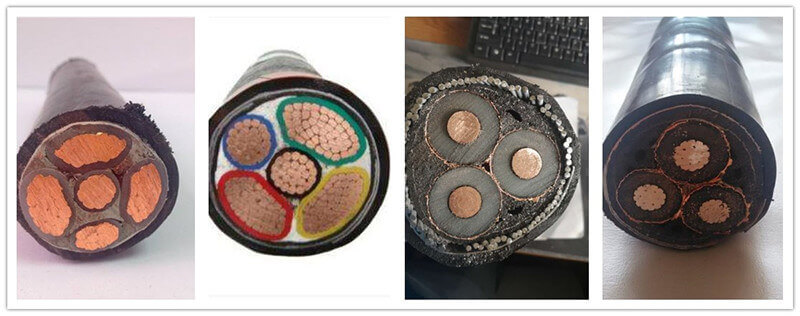
Conductor resistance is one of the most critical parameters for verifying whether the supplied conductor construction complies with the specified design standards.
To convert conductor DC resistance measured at ambient test temperature (t) to the standard 20°C reference temperature per kilometer:
Where: R20 = Corrected conductor DC resistance at 20°C (Ω/km); Rt = Measured resistance at test temperature t (°C); 254.5 / 245.0 = Standard temperature coefficients for copper and aluminum.
Under both IEC 60502-1 and IEC 60502-2 frameworks, conductor DC resistance measurement is classified as a Sample Test (ST) performed on manufactured lengths (or batch samples). All measured values must be corrected to 20°C and a 1 km reference basis in accordance with IEC 60228.
When reviewing the test report, procurement engineers should verify:
For medium-voltage XLPE cable, partial discharge testing deserves particular attention.
Under IEC 60502-2, partial discharge (PD) testing is a mandatory Routine Test (RT) carried out on 100% of manufactured lengths for all cables possessing conductor and insulation screening systems. The test is performed at an AC voltage of 1.73 U0, and the certificate must explicitly confirm that the magnitude of discharge does not exceed 10 pC (with measurement sensitivity of 10 pC or better).
When reviewing an MV certificate, look for:
| Item | What to Confirm |
|---|---|
| Cable voltage | For example, 6/10 kV, 8.7/15 kV or 12/20 kV as specified by the project |
| Screened construction | Conductor screen, insulation screen and metallic screen construction |
| PD result | Actual result and stated test sensitivity |
| Test identification | Sample, cable item or production reference |
Do not assume that every document labelled “MV cable test report” contains the same test scope. The report should be reviewed against the applicable cable construction and project specification.
A voltage test result should be reviewed together with the cable’s voltage designation and applicable standard—not as an isolated number.
A high-voltage test must be performed as a routine test on all completed cable lengths to ensure insulation integrity and dielectric strength.
Check these fields:
For an 11 kV project, for example, the certificate should clearly identify the actual cable voltage designation and construction. A generic “high-voltage test passed” statement provides much less useful evidence than a traceable test record.
Electrical test results alone do not establish that the cable construction matches the approved datasheet.
For project-specific armoured cables, dimensional verification can be particularly useful because the armour, insulation and sheath directly affect the finished cable diameter, weight, installation requirements and accessory compatibility.
Depending on the applicable standard and project inspection plan, review:
IEC 60502-2 includes sample checks covering conductor examination, cable dimensions, insulation and sheath thickness, armour wires/tapes and overall diameter.
This is especially important when comparing suppliers. Two cables may both be described as Cu/XLPE/SWA/PVC, yet their detailed construction can differ in conductor design, insulation thickness, armour dimensions and overall diameter. The approved datasheet should therefore remain the reference document for comparison.
A technically correct test result is much more useful when the buyer can connect it to the actual cable shipment.
For international projects, the certificate should ideally allow the buyer to connect the following chain:
Look for identifiers such as:
If a report describes only a generic cable model without any link to the production scope, ask the supplier whether it is a type/design report or a production test report. That distinction can change the evidentiary value of the document.
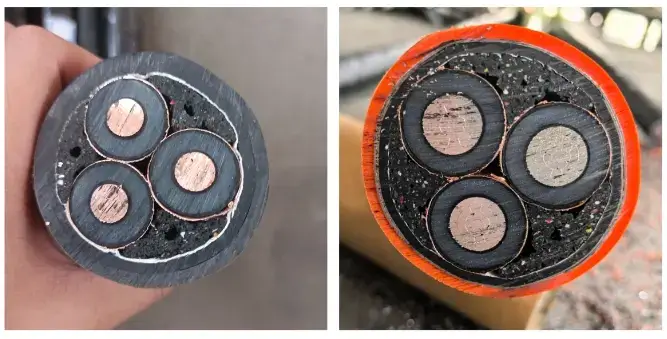
For projects requiring stronger quality assurance, the buyer should also review how the test was performed and who accepted the result.
Useful information may include:
| Document Field | Why It Matters |
|---|---|
| Test equipment identification | Helps establish test traceability |
| Calibration status | Supports confidence in measured values where required |
| Inspector / witness | Shows who witnessed or reviewed the test when applicable |
| Manufacturer approval | Confirms document responsibility |
| Customer / third-party approval | Important where the project requires independent inspection |
Not every project requires a third-party laboratory or customer witness. The correct inspection level should come from the contract, Inspection and Test Plan (ITP), owner specification or purchase order.
A certificate can show “PASS” while the overall order is still not ready for shipment.
Before release, check whether the quality package contains any:
The final release package should make it clear whether the cable is approved for shipment, conditionally released, or still awaiting customer/third-party approval.
This final administrative check is often overlooked because procurement teams focus on the test values. In project supply, however, a technically compliant cable with incomplete release documentation can still create a delivery problem.
Suppose the project requires an 8.7/15 kV or 6/10 kV class XLPE power cable. Instead of asking only for “IEC certificate,” a procurement engineer can request a document package covering:
The exact document package should follow the project specification and agreed inspection plan. The purpose is not to collect as many certificates as possible. It is to make the cable’s design compliance, production compliance and shipment identity traceable.
Before approving a cable shipment, procurement and engineering teams can use this short checklist:
| Check | Buyer Confirmation | Status |
|---|---|---|
| 1 | Cable construction matches approved specification | ☐ |
| 2 | Correct IEC standard and edition identified | ☐ |
| 3 | Routine / sample / type test scope confirmed | ☐ |
| 4 | Conductor resistance verified | ☐ |
| 5 | MV partial discharge result reviewed where applicable | ☐ |
| 6 | Voltage test result verified | ☐ |
| 7 | Dimensions, insulation, sheath and armour checked where required | ☐ |
| 8 | Production and drum traceability confirmed | ☐ |
| 9 | Witness, calibration and approval records reviewed where required | ☐ |
| 10 | Deviations closed and shipment release confirmed | ☐ |
A single certificate rarely contains everything needed for project acceptance.
For a project cable order, a more useful quality package may combine:
The objective is a traceable documentation chain rather than a large collection of unrelated certificates.

Huanghe Cable is a power cable manufacturer established in 1980, supplying low-voltage and medium-voltage power cables for international industrial, infrastructure, utility and energy projects.
For project orders, cable documentation should be developed around the actual specification rather than treated as a generic catalogue package. Depending on the order and project requirements, procurement teams can request technical datasheets, applicable standard references, production test records, inspection documentation, packing information and other agreed quality documents.
Huanghe Cable’s product range includes Cu/Al conductor power cables, XLPE insulated LV/MV cables, armoured power cables and customized cable constructions. The applicable standard and test scope should always be confirmed against the project specification before production.
For MV cable projects, this is particularly important because the technical package may need to address the voltage class, conductor material, conductor size, conductor and insulation screens, metallic screen, armour, sheath, short-circuit requirements and installation conditions together.
If you already have a BOQ, cable schedule, datasheet or tender specification, sending the document with your inquiry can reduce clarification cycles and allow the supplier to quote against the same technical basis.
Need a Power Cable Quotation or Technical Review?
Send your cable specification, BOQ, datasheet or project requirement. Huanghe Cable can review the required construction, standard, testing and supply scope before preparing a quotation.
First confirm that the certificate matches the actual cable specification, purchase order, voltage class, conductor, cable construction and production identity. A technically correct test report is not useful if it belongs to a different cable design.
Not necessarily. A type test provides design-performance evidence, while routine testing provides production-level evidence. The required document package depends on the cable standard, project specification and inspection plan.
Under IEC 60502-2, routine tests include conductor resistance, partial discharge testing for applicable screened cables and voltage testing. An electrical oversheath test is also included where required by the standard. The current IEC consolidated edition is IEC 60502-2:2014 (incl. AMD1:2024).
For cables within IEC 60502-1:2021, routine testing includes conductor resistance and voltage testing. Additional sample and type tests apply according to the cable design and standard requirements.
Traceability connects the test result to the actual production batch, cable length or drum. This is especially useful when an order contains multiple cable sizes, different voltage classes or several production lots.
Where the project inspection plan requires them, yes. Calibration information can support confidence in measurement results and may form part of a customer or third-party inspection package.
For project orders, suppliers can generally prepare documentation according to the agreed technical specification and inspection requirements. Buyers should define required documents before production rather than after shipment.
No. IEC 60287-1-1:2023 addresses calculation of cable current rating and losses under steady-state conditions. It is relevant to engineering calculations such as ampacity, but it is not the primary product routine-test standard.
Ideally provide the voltage rating, conductor material, conductor size, number of cores, insulation, metallic screen if applicable, armour, sheath, installation method, applicable standard, quantity, destination and required inspection or test documents. A BOQ, cable schedule or project specification is even better.

Please contact us for a free quotation by the below form. We promise the quickest response within 12 hours.