Updated 2026/11/05 · Edited by Huanghe Cable Technical Team · Reading time: 9–12 minutes
When specifying cables for a metro station, underground railway or road tunnel, selecting an LSZH cable is only the starting point. For B2B project managers, procuring the right low smoke zero halogen (LSZH) cable means balancing multiple performance parameters. The project may also require limits for smoke density, halogen acid gas emission, flame propagation or circuit integrity under fire conditions. These requirements address different risks and must be checked separately.
For procurement engineers, the important questions are practical: Which cable construction is suitable for each circuit? Which IEC or British Standard does the project specification actually require? What test reports must a supplier provide? And can the proposed manufacturer demonstrate that the documents cover the cable being quoted?
This guide explains the main LSZH cable test standards, compares common cable constructions used in tunnel and metro projects, and outlines the technical information to confirm before placing an order. It also explains Huanghe Cable’s product range and the limits of the certificates and test documentation currently available.
Contents
Tunnels, underground railway stations and enclosed transport facilities have specific fire-safety challenges. Cable routes may pass through areas with limited natural ventilation, restricted evacuation access and large quantities of electrical and control equipment.
When a cable burns, the resulting smoke, gases and flame propagation can affect people, equipment and adjacent cable circuits. The project may therefore specify several separate cable performance requirements.
Smoke can reduce visibility along evacuation routes and make it more difficult for emergency personnel to locate equipment or access affected areas. LSZH cable compounds are selected to reduce smoke generation compared with conventional materials that produce heavier smoke under the relevant test conditions.
Smoke performance is commonly evaluated using IEC 61034-2. The result is expressed as light transmittance through the smoke produced during the test. The project specification determines the required acceptance value.
Some conventional cable materials contain halogens. During combustion, halogen-containing materials can release acidic gases that may contribute to corrosion of electrical contacts, control equipment and other metal components.
LSZH cable compounds are designed to reduce halogen acid gas emission. IEC 60754-1 and IEC 60754-2 are commonly referenced when a project needs to evaluate the gas released by cable materials during combustion.
In a cable tunnel or station cable tray, several cables may be installed together. A fire involving one cable can create a risk of flame spreading along adjacent cables if the installed cable system does not meet the required flame-propagation performance.
IEC 60332 includes test methods for single cables and groups of bunched cables. The appropriate test depends on the installation and the project specification.
Some circuits are expected to continue operating during a fire. Examples may include emergency lighting, fire pumps, smoke extraction systems, fire alarm circuits and selected emergency communication systems.
These applications may require fire-resistant cables tested for circuit integrity under defined fire conditions. IEC 60331 and BS 6387 are examples of standards referenced for this purpose.
Important: An LSZH cable is not automatically a fire-resistant cable. The required performance must be identified from the cable schedule and the project’s fire strategy.
Specifications sometimes use broad descriptions such as “LSZH fire-rated cable”. This can create confusion because several different properties may be included in the same project requirement.
The following table separates the principal performance areas and the standards commonly used to evaluate them.
On mobile devices, swipe horizontally to view the complete table.
| Performance requirement | Common test reference | What is evaluated | Procurement check |
|---|---|---|---|
| Halogen acid gas and acidity | IEC 60754-1 / IEC 60754-2 | Halogen acid gas content, pH and conductivity of evolved gases. | Confirm the required parts, test results and acceptance criteria. |
| Smoke density | IEC 61034-2 | Light transmittance through smoke produced during the test. | Check the test edition and the specified minimum transmittance. |
| Flame propagation | IEC 60332-1-2 / IEC 60332-3 series | Flame spread along a single cable or a group of bunched cables. | Confirm the required test part and, for bunched cables, the category. |
| Circuit integrity under fire | IEC 60331 / BS 6387 | Whether the cable maintains electrical circuit integrity under defined fire conditions. | Confirm the test method, conditions, duration and required report. |
These test families are not interchangeable. An IEC 61034-2 smoke-density report does not demonstrate flame-retardant performance. An IEC 60332 report does not prove circuit integrity. Likewise, a cable’s LSZH material description does not establish that it has passed every test listed in a project specification.
The IEC 60754 series is used to evaluate gases released from materials taken from cables when they are tested under specified combustion conditions. Different parts of the series measure different properties.
| Standard | Main measurement | What buyers should check |
|---|---|---|
| IEC 60754-1 | Amount of halogen acid gas released, expressed as an HCl equivalent. | Measured value, reporting limit, sample description and acceptance criterion. |
| IEC 60754-2 | Acidity and conductivity of the aqueous solution formed by evolved gases. | Both pH and conductivity results, together with the required limits. |
| IEC 60754-3 | Low-level halogen content using ion chromatography. | Whether the project requires this method and whether the report is available. |
IEC 60754-1 evaluates the amount of halogen acid gas released from the tested material. IEC 60754-2 evaluates the acidity and conductivity of the solution produced by the evolved gases.
A pH or conductivity result under IEC 60754-2 should not be described as a direct measurement of halogen content. Similarly, a low result under IEC 60754-1 should be interpreted in accordance with the method’s measurement scope and reporting limit.
For procurement, the useful approach is to request the actual report, identify the test method and edition, and compare the measured values with the acceptance criteria stated in the project specification.
Procurement check
Do not accept a generic statement such as “halogen-free tested” as a substitute for a test report. Confirm which part of IEC 60754 was used, what material or cable sample was tested, and whether the report covers the construction being offered.
Need help reviewing specific fire test standards for your metro or tunnel cable schedule?
Send Huanghe Cable your technical specification or BOQ for a prompt professional evaluation.
| Request Technical Review | WhatsApp Us |
IEC 61034-2 is commonly referenced when a project specifies low-smoke cable performance. The test evaluates the amount of light transmitted through smoke generated by a burning cable sample under defined test conditions.
The result is expressed as a percentage of light transmittance. A higher percentage generally indicates that more light passes through the smoke during the test.
Do not confuse the test method with the acceptance limit. IEC 61034-2 describes how the test is performed and how the result is determined. The minimum required transmittance is normally stated in the applicable product specification, project specification or other governing requirement.
A 60% light-transmittance result means that 60% of the measured light is transmitted through the smoke under the defined test conditions. A higher result generally indicates better visibility conditions in the test enclosure.
It should not be interpreted as a direct measurement of human viewing distance or as a guarantee of visibility in an actual tunnel fire. Real conditions depend on the fire, ventilation, cable quantity, enclosure geometry and other factors.
When comparing reports, check the edition of the test method, the sample description and the measured result. Do not compare figures from different editions without confirming whether the methods and reporting basis are comparable.
Procurement check
If the project specifies IEC 61034-2 with a minimum light transmittance, request a report showing the test edition, measured result and sample identification. A product brochure stating “low smoke” is not the same as a test report.
IEC 60332 contains test methods for evaluating the flame propagation characteristics of electric cables under defined conditions. The distinction between a single-cable test and a bunched-cable test is especially important for tunnel and metro installations.
| Reference | Test arrangement | Procurement relevance |
|---|---|---|
| IEC 60332-1-2 | Vertical flame propagation test on a single insulated cable or wire using a defined flame source. | Relevant when the project requirement concerns an individual cable. |
| IEC 60332-3 series | Vertical flame propagation test on bunched cables installed in a defined test arrangement. | Relevant to cable groups installed together on trays or similar arrangements. |
The IEC 60332-3 series includes different test categories with different non-metallic material loading and test arrangements. For example, IEC 60332-3-22, -23, -24 and -25 correspond to Categories A, B, C and D respectively.
A specification that calls for IEC 60332-3-23 is not automatically satisfied by a report to IEC 60332-1-2. The two tests evaluate different installation arrangements.
It is also not appropriate to assume that one category is suitable for every metro project. The specified category should be selected by the project designer based on the cable installation, applicable requirements and the relevant test criteria.
Procurement check
Ask the supplier to identify the exact IEC 60332 part and category shown in the report. “Flame-retardant cable” or “IEC 60332 compliant” without the test reference is not enough to verify a detailed project requirement.
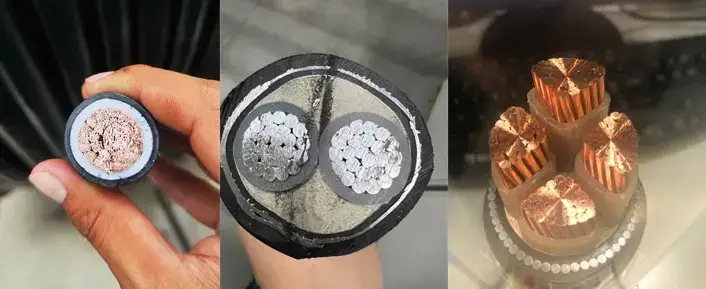
Flame retardance and fire resistance address different questions.
Flame-retardant performance concerns the propagation of flame along a cable under a defined test. Fire resistance concerns whether a cable can maintain circuit integrity while exposed to specified fire conditions.
Some tunnel and metro circuits may need to remain operational during a fire. Depending on the project design, these can include fire pumps, smoke extraction systems, emergency lighting, fire alarm systems and other designated life-safety circuits.
The IEC 60331 series covers tests for circuit integrity under fire conditions. The applicable part depends on factors such as cable characteristics and the test arrangement.
When a project specifies IEC 60331, the buyer should confirm the exact part, test conditions, voltage and duration required. A general statement that a cable is “fire-resistant” does not identify the performance demonstrated by a particular test.
BS 6387 is a British Standard for performance requirements and testing of cables required to maintain circuit integrity under fire conditions. Its categories describe different test conditions, including fire exposure and additional conditions such as water exposure or mechanical shock.
The designation CWZ refers to the demonstration of the relevant C, W and Z categories. These are separate test categories, not one universal test that can be inferred from a cable’s model number.
In many fire-resistant cable designs, a mica-glass tape layer is applied around the conductor to provide a heat-resistant barrier. The remaining insulation, sheath and protective layers are selected according to the required cable construction.
For Huanghe’s applicable WDZN-YJY designs, the fire-resistant construction utilizes high-performance synthetic mica tape (or premium phlogopite mica tape) helically applied over the copper conductor. This inorganic barrier provides a heat-resistant ceramic residue under fire conditions, maintaining basic circuit separation. However, this construction description is a design feature and does not by itself prove that a particular manufactured batch has passed IEC 60331 or BS 6387. This describes the cable design; it does not by itself prove that a particular cable has passed IEC 60331 or BS 6387.
Important distinction: A construction description, a product certificate and a fire-resistance test report are different forms of evidence. If a project requires a specific circuit-integrity test report, the report must be provided for the relevant tested construction.
Not every LSZH cable installed in a metro or tunnel project has the same function. Power feeders, lighting circuits, control cables and designated life-safety systems. Each specific circuit type demands an appropriately rated LSZH cable construction matching the overall electrical design.
The following table is an initial selection reference. It is not a universal design schedule. Final cable selection must follow the approved cable list, installation conditions and project fire strategy.
| Circuit or application | Possible cable type | Main selection considerations |
|---|---|---|
| LV distribution feeders | WDZ-YJY or armoured LSZH power cable | Voltage rating, conductor material, cross-section, installation method, armour and project-specified LSZH requirements. |
| Underground or mechanically exposed routes | WDZ-YJY23 or WDZ-YJY33, subject to design | Required mechanical protection, installation route, cable support and applicable sheath construction. |
| Emergency power circuits | WDZN-YJY or an applicable fire-resistant cable design | Required circuit-integrity standard, test conditions, duration and supporting report. |
| Control and monitoring circuits | WDZ-KYJY or a specified shielded LSZH control cable | Core count, conductor size, screening, signal requirements and installation environment. |
| MV power distribution | LSZH-sheathed XLPE medium-voltage cable, subject to confirmed design | Voltage class, conductor screen, insulation screen, metallic screen, armour and outer sheath requirements. |
A cable selected for a fire pump or smoke extraction circuit may need a specific circuit-integrity performance. A standard LSZH feeder cable should not be substituted simply because it has a low-smoke sheath.
Similarly, an armoured cable is not automatically required for every underground feeder. Armour selection should follow the installation method and mechanical protection requirements rather than the application name alone.
Need help matching the correct LSZH cable construction for your specific metro or tunnel project?
Send Huanghe Cable your cable schedule, BOQ or technical specification for a prompt technical review.
| Request Technical Review | WhatsApp Us |
LSZH is a description of cable material characteristics, not a complete cable construction. The actual cable design also depends on conductor material, insulation, armour, screening, voltage rating and outer sheath.
Huanghe manufactures several LSZH power and control cable model families. The following descriptions summarize the principal construction differences. The final design, including exact armour layers, bedding and sheath materials, should be confirmed against the project datasheet and approved drawing.
WDZ-YJY is an LSZH power cable with XLPE insulation and an LSZH polyolefin outer sheath.
Typical construction:
This construction can be considered for LV power distribution where the installation does not require metallic armour and the cable specification accepts the offered construction.
WDZ-YJY23 is an armoured LSZH power cable based on the WDZ-YJY insulation system, combining steel-tape armour with an inner covering and outer sheath made of low-smoke zero-halogen (LSZH) polyolefin compounds to maintain overall environmental compliance.
Typical construction:
The steel-tape armour provides additional mechanical protection. Its suitability depends on the installation route, mechanical loading and project requirements.
WDZ-YJY33 is an LSZH power cable utilizing heavy-duty steel-wire armour for demanding mechanical protection. Like the steel-tape variant, all non-metallic components including the inner bedding and outer sheath must be manufactured from compatible LSZH materials.
Typical construction:
For vertical installations, direct burial or other demanding routes, the designer should verify the required armour design and cable support arrangements. The model designation alone should not replace a construction drawing.
WDZN-YJY combines an LSZH cable construction with a fire-resistant layer. In Huanghe’s applicable WDZN-YJY designs, phlogopite mica tape is applied directly over the conductor.
Typical construction:
The mica tape is a design feature intended to provide a heat-resistant barrier. It should not be treated as proof of a specific fire-resistance classification. Where the project requires IEC 60331, BS 6387 or another circuit-integrity test, the required report must be checked separately.
Where the project requires both a fire-resistant construction and additional mechanical protection, an armoured WDZN design such as WDZN-YJY23 may be considered, subject to the approved construction.
Typical construction concept:
The exact construction and available core-size combinations should be confirmed for each order.
WDZ-KYJY is an LSZH control-cable model family designed for auxiliary, monitoring, and interlocking circuits in stations and tunnels.
Where circuits are routed close to traction power systems or variable-frequency drives, engineers should specify shielded variants (such as WDZ-KYJYP with copper wire braiding or aluminum foil shielding) to mitigate electromagnetic interference (EMI). A standard unshielded control cable should not be assumed suitable for every instrumentation or signal application.
Medium-voltage LSZH cable requires a different construction from LV power cable. A typical XLPE-insulated MV design includes a conductor screen, XLPE insulation, an insulation screen, metallic screen and an outer sheath. Armour may be added where required by the installation.
The voltage class, conductor size, metallic screen section, armour type and LSZH sheath requirements must be specified separately. A general reference to WDZ-YJY is not sufficient to define an MV cable construction.
| Model family | Main construction feature | Typical selection consideration |
|---|---|---|
| WDZ-YJY | XLPE insulation, LSZH sheath, unarmoured. | LV power distribution where armour is not required. |
| WDZ-YJY23 | XLPE insulation, steel-tape armour, LSZH sheath. | Mechanical protection requirements. |
| WDZ-YJY33 | XLPE insulation, steel-wire armour, LSZH sheath. | Project-specific mechanical protection and installation requirements. |
| WDZN-YJY | Mica tape over conductor, XLPE insulation, LSZH sheath. | Fire-resistant design where circuit-integrity requirements must be reviewed. |
| WDZN-YJY23 | Fire-resistant layer, XLPE insulation, steel-tape armour and LSZH sheath. | Projects requiring both the specified fire-resistant construction and mechanical protection. |
| WDZ-KYJY | LSZH control cable construction. | Control circuits; confirm core count, size and screening. |
Note: The table describes model families and construction concepts. It does not mean that every model is available in every voltage rating, conductor material, core configuration or cross-section. The final construction must be confirmed in the technical quotation.
For more information about Huanghe’s flame-retardant and fire-resistant cable models, see Flame Retardant and Fire-Rated Power Cables.
International projects may use IEC standards, British Standards, national standards or a combination of these. The standard number alone does not always define the complete cable requirement.
IEC publications are widely referenced in cable specifications. The relevant standards depend on the property being evaluated:
Some project specifications refer to British cable product standards or fire-performance standards. These should be reviewed according to their actual scope rather than treated as interchangeable with an IEC cable designation.
These references have different scopes. For example, BS 6387 is not a product construction standard, and BS 8491 should not be treated as a general smoke-density or halogen-acid-gas test.
Projects in Southeast Asia, Central Asia and Africa may reference national standards, IEC adoptions, British Standards or client-specific technical specifications. The applicable requirement can vary between countries, owners, consultants and project types.
For this reason, buyers should provide the actual standard number, edition and project specification rather than asking a supplier to quote against a broad description such as “international LSZH standard”.
Where a tender includes a national approval, conformity mark or third-party certification requirement, this should be identified separately from the cable’s design standard and test methods.
In regional infrastructure and metro tenders across Southeast Asia, Central Asia, and Africa, project specifications predominantly anchor on IEC international standards, British Standards (BS), or regional adoptions. Procurement engineers in these markets must align LSZH cable performance with the specific governing framework—such as IEC 60754 and IEC 61034-2 for material compliance, or BS 6724/BS 7846 for armoured low-smoke requirements—ensuring the technical submittal matches local municipal or rail authority approvals.
For cables covered by the EU Construction Products Regulation when permanently incorporated in construction works, EN 50575 is associated with reaction-to-fire performance classification and the relevant Declaration of Performance requirements.
Huanghe does not hold an EN 50575 CPR reaction-to-fire classification or a CPR Declaration of Performance for the products discussed in this article. If a project specification requires a CPR class or declaration, this must be resolved before the supplier is considered technically acceptable.
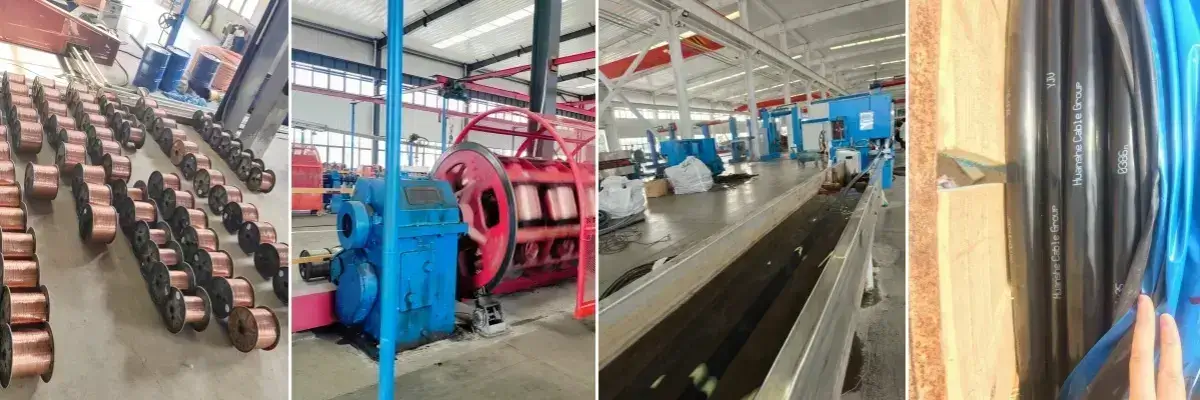
A supplier’s product description is only one part of a technical evaluation. For a tunnel or metro project, the buyer should compare the proposed cable construction, applicable certificates, test reports and production inspection documents.
| Document or information | What to verify | Common documentation gap |
|---|---|---|
| Technical datasheet | Voltage, conductor, core configuration, insulation, sheath, armour and applicable standard. | A general catalogue description without the actual construction. |
| Construction drawing | Layer sequence, material, nominal thickness and armour details. | Model number provided without a defined layer structure. |
| Product certificates | Certificate issuer, covered product, applicable standard and validity or scope. | A company-level certificate presented as proof that every cable has passed every product test. |
| IEC 60754 report | Part number, test edition, sample identification, measured values and acceptance criteria. | A generic LSZH statement without a relevant test report. |
| IEC 61034-2 report | Test edition, measured light transmittance and sample identification. | A low-smoke claim without measured test evidence. |
| IEC 60332 report | Exact part, category where applicable and tested cable construction. | A single-cable test report offered for a bunched-cable requirement. |
| Fire-resistance report | IEC 60331 or BS 6387 reference, test conditions, duration and sample. | A mica-tape construction description presented as proof of circuit integrity. |
| Inspection and FAT records | Routine inspection, electrical tests, batch identification and agreed witness inspection. | A factory photograph or equipment list used in place of an inspection record. |
One of the most important checks is whether a test report actually covers the cable being quoted. A report may relate to a compound sample, an insulation material or a finished cable of a particular construction. It should not automatically be extended to every model, size or voltage class manufactured by the same factory.
For a project requiring specific LSZH or fire-resistance test results, the buyer should request the relevant report before technical approval. If a supplier does not hold the required report, that gap should be recorded rather than assumed to be covered by another certificate.
Huanghe Cable is an established LSZH cable manufacturer that has operated since 1980. The company supplies industrial power and control LSZH cable products to international customers in Southeast Asia, Central Asia and Africa, including project-based orders requiring specified conductor materials, cable constructions and packaging arrangements.
For LSZH-related requirements, Huanghe’s product range includes WDZ-YJY, WDZ-YJY23, WDZ-YJY33, WDZN-YJY and WDZ-KYJY model families. Copper and aluminium conductor options, armour configurations and other construction details depend on the specific product design.
Huanghe holds applicable IEC, CB and CCC certificates within their respective stated scopes. These documents should be reviewed according to the product, model and requirements covered by each certificate.
These certificates should not be interpreted as dedicated proof of LSZH or fire performance. While Huanghe maintains comprehensive ISO, CB, and CCC manufacturing qualifications, specialized batch-specific test reports for IEC 60754, IEC 61034-2, or IEC 60331 are executed on a project-specific basis. Rather than relying on generic off-the-shelf reports that may not match exact client constructions, Huanghe routinely collaborates with accredited international third-party testing agencies (such as SGS) to perform dedicated Factory Acceptance Testing (FAT) for each tender.
Consequently, where a tender requires these specific reports as mandatory technical evidence, the requirement must be identified and reviewed before an order is placed. Huanghe will not represent a general IEC, CB or CCC certificate as a substitute for a missing specialized test report.
Huanghe’s manufacturing capabilities include power cable and control cable production, conductor processing, insulation and sheath extrusion, armouring and cable testing. Production and inspection arrangements are selected according to the cable type and applicable manufacturing requirements.
For an order, buyers can discuss the required technical documents and inspection scope before production. Where agreed, third-party inspection or customer-witnessed factory acceptance activities can be arranged. The inspection scope and any additional testing should be confirmed in the purchase specification.

For product details, refer to Huanghe’s flame-retardant and fire-resistant power cable range. For a project-specific review, send the cable schedule and required standards so the proposed construction and available documentation can be checked together.
When an international metro or tunnel project mandates strict, project-specific batch test reports (such as independent laboratory verification for IEC 60754 or IEC 61034-2), Huanghe supports factory acceptance testing (FAT) and third-party witness testing (e.g., via international inspection agencies like SGS or Intertek). Buyers do not need to rely solely on pre-existing stock reports; dedicated sample testing for the specific order can be integrated into the manufacturing and procurement schedule prior to shipment.
An enquiry that only states “LSZH cable” and a cross-section is usually insufficient for an accurate technical and commercial quotation. When purchasing any specialized tunnel LSZH cable system, different suppliers may assume different conductor materials, armour types, sheath compounds and test requirements.
To make quotations comparable, include the following information in the RFQ.
Application: Metro station LV power distribution
Cable model: WDZ-YJY23
Voltage: 0.6/1 kV
Conductor: Copper, Class 2
Construction: XLPE insulation, steel-tape armour and LSZH outer sheath
Core and size: 4C × 95 mm²
Quantity: 2,000 m
Required standards: List the exact IEC or project references and editions.
Required reports: Specify whether IEC 60754, IEC 61034-2 or IEC 60332 reports are mandatory.
Delivery: CIF destination port, steel-wooden drums, delivery schedule to be confirmed.
For fire-resistant circuits, provide a separate line identifying the required fire-resistance standard, test duration and report requirement. Do not combine ordinary LSZH feeders and fire-resistant circuits into one generic cable description.
When comparing quotations, check that every supplier is pricing the same construction and the same document requirements. A lower price based on a different armour system, sheath material or missing mandatory test evidence is not a like-for-like offer.
Need LSZH Cable for a Tunnel or Metro Project?
Send Huanghe Cable your cable schedule, BOQ or technical specification. Our team can review the required cable construction, voltage rating, conductor and armour options, and clarify the available certificates and documentation before quotation.
| Request a Quote | WhatsApp Us | Email Sales Team |

LSZH describes cable materials designed to reduce smoke generation and halogen acid gas emission under specified test conditions. Flame retardance concerns the cable’s performance in a flame-propagation test. A cable can have an LSZH sheath and still require separate evidence for flame-retardant performance.
No. LSZH and fire resistance are separate properties. Fire-resistant cable designs may include a mica-glass tape layer around the conductor, but the construction itself does not prove that the cable has passed a specified circuit-integrity test. The required IEC 60331 or BS 6387 report must be checked separately.
IEC 60754 is used to evaluate gases released from cable materials during combustion. IEC 60754-1 measures halogen acid gas content, while IEC 60754-2 measures the acidity and conductivity of the resulting solution. The two parts provide different information.
IEC 61034-2 measures smoke density by evaluating light transmittance through smoke produced during a defined cable-burning test. The required minimum transmittance is determined by the applicable project or product specification.
IEC 60332-1-2 evaluates flame propagation on a single cable in a vertical test arrangement. The IEC 60332-3 series evaluates flame propagation on bunched cables under defined test conditions. A report for one method does not automatically satisfy a requirement for the other.
WDZ-YJY is an LSZH XLPE power cable with an LSZH outer sheath. WDZN-YJY adds a fire-resistant construction, using phlogopite mica tape over the conductor in Huanghe’s applicable design. The required circuit-integrity performance must still be verified against the relevant test requirement and report.
They are armoured cable model families, with steel-tape armour for WDZ-YJY23 and steel-wire armour for WDZ-YJY33 in the described constructions. The suitable model depends on the mechanical protection, installation method and project requirements. Confirm the complete construction before ordering.
Huanghe holds applicable IEC, CB and CCC certificates within their stated scopes, but does not currently have dedicated monitoring reports demonstrating the specific LSZH or flame-retardant performance tests discussed in this article. Where a project requires these specialized reports as mandatory evidence, the requirement must be reviewed before technical approval or order placement.
Huanghe’s applicable WDZN-YJY construction uses phlogopite mica tape over the conductor as a fire-resistant design feature. However, Huanghe does not currently hold dedicated IEC 60331 or BS 6387 fire-resistance test reports for the products discussed here. A mica-tape construction should not be treated as proof of a specific circuit-integrity classification.
Huanghe has completed orders for customers in Southeast Asia, Central Asia and Africa. Cable model, construction, technical documentation and delivery requirements are reviewed according to each customer’s project specification.
Provide the cable model or construction, voltage rating, conductor material and class, core count, cross-section, armour requirements, applicable standards, required test reports, total quantity, drum length and delivery destination. A BOQ or cable schedule is the most useful starting point for a project quotation.
Technical scope: IEC and British Standard references in this article identify commonly used test methods and product-standard families. The applicable edition, acceptance criteria and required documentation must be confirmed against the approved project specification.
Huanghe documentation note: Product construction descriptions and available certificates do not replace specialized flame-retardant, smoke-density, halogen-acid-gas or fire-resistance test reports. Buyers should confirm documentation requirements before technical approval.

Please contact us for a free quotation by the below form. We promise the quickest response within 12 hours.