A power cable should not move directly from delivery truck to installation trench. The receiving inspection should confirm that the delivered cable matches the approved specification, quantity, identification, drum configuration, physical condition and supporting documentation before the cable is released for installation.
This is particularly important for LV and MV power cables supplied on drums. A cable can appear correct from its outer sheath while still having an incorrect construction, damaged end seal, wrong drum length, missing identification or documentation that does not correspond to the delivered cable.
The receiving inspection therefore works as a final procurement control point between your original power cable RFQ requirements and the field installation stage.
A power cable receiving inspection should verify the delivered cable against the approved specification, purchase order, packing list, drum markings, cable length, physical condition, cable ends, test documentation and any agreed inspection requirements before installation. The inspection does not replace electrical or laboratory testing required by the applicable cable standard; it confirms that the product received is identifiable, physically acceptable and supported by the required documentation.
Sourcing Power Cables for an Upcoming Infrastructure or Energy Project?
Huanghe Cable Group provides full factory test reports (TCs), third-party inspection compliance (SGS/BV), and custom drum packaging.
The first receiving-inspection decision is whether the delivered cable is the same cable that was technically approved for the project. For LV cables within the scope of IEC 60502-1:2021 and MV cables within the scope of IEC 60502-2:2014+AMD1:2024, the applicable cable standard defines construction, dimensions and testing requirements; the project specification and approved datasheet determine the specific design to be supplied.
Do not begin with the outer appearance. Start with the controlled documents:
The inspection team should establish one reference specification before checking the physical shipment. If the purchase order says one conductor material, voltage rating, core configuration or armour construction while the drum marking indicates another, the discrepancy should be recorded and resolved before installation.
The cable designation on the drum should be consistent with the approved cable construction, not merely similar to the product name used in the quotation. Check conductor material, number of cores, nominal cross-sectional area, insulation system, metallic screen where applicable, armour, sheath and voltage rating.
| Inspection Item | What to Compare | Typical Evidence |
|---|---|---|
| Voltage rating | U0/U (Um) (e.g., 0.6/1 kV, 6/10 kV, 18/30 kV) matching project scope and system grounding type | Cable marking, datasheet, PO |
| Conductor | Copper or aluminium; nominal cross-section | Marking, datasheet, test records |
| Core configuration | Number of cores and designated neutral/earth functions | Approved construction drawing |
| Insulation | Specified insulation material | Datasheet and approved design |
| Armour | Armour type and material where specified | Datasheet, marking and visual inspection |
| Sheath | Material and specified colour/marking | Cable marking and approved datasheet |
A cable drum should be individually identifiable so the physical cable can be connected to its manufacturing and quality records. Record the drum number and compare it with the packing list, delivery documents and any available production or test documentation.
Depending on the project and manufacturer’s documentation system, useful identifiers may include:
Traceability is particularly important when several cable sizes or constructions are delivered in the same shipment. A general certificate covering a product family should not automatically be treated as proof that every individual drum has the same production history.
Quantity should be checked at drum level because total shipment quantity can hide an individual drum-length discrepancy. Compare the packing list and purchase order with the actual number of drums received and the marked cable length for each drum.
Record:
Do not assume that all drums in one shipment contain the same length. Project orders often use different drum lengths because of manufacturing, transport or installation requirements.
The drum itself is part of the receiving condition because damage to the drum can expose the cable to mechanical damage during transport, lifting or storage.
Check whether:
Photograph the drum before unloading if the shipment is high value or the project has formal receiving documentation. Photographs should show the drum number, overall drum condition and any visible damage.
Need a cable specification checked before production or delivery?
The outer sheath should be visually inspected around the accessible cable length for cuts, deep scratches, crushing, deformation, abrasion or other visible damage. The receiving inspection is not intended to prove internal cable integrity by visual examination, but visible damage can identify a transport or handling issue that requires further assessment.
Pay particular attention to:
For armoured cable, visible sheath damage should not be dismissed simply because the metallic armour remains intact. The condition of the complete cable construction should be assessed against the project requirements.
Pay particular attention to:
For armoured or metallic-screened cables: Visually inspect exposed ends for any sign of oxidation, rust, or mechanical displacement. Damage to the outer sheath directly compromises moisture defense for the underlying steel tape/wire armour, leading to rapid corrosion in humid or underground environments.
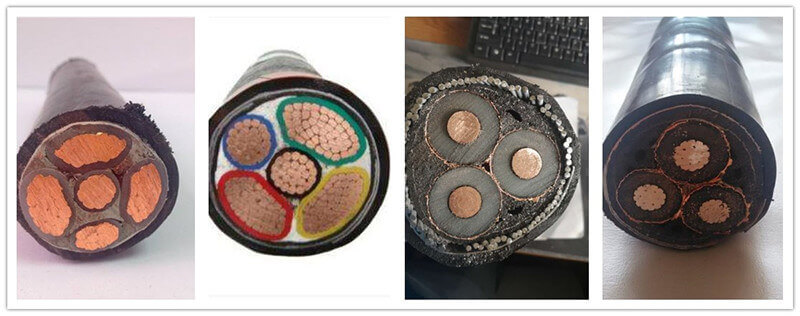
Cable ends should remain properly sealed and protected, and undergo basic electrical verification before the cable is released for installation. This is particularly critical for power cables exposed to rain, ocean condensation, or long-transit humid storage conditions.
Key inspection steps include:
⚡ Engineering Practice — Pre-Acceptance Insulation Resistance (IR) Test:
Before signed acceptance, perform a quick Insulation Resistance (IR) Test (Megger Test) between main cores, and between cores to the metallic armour/screen using a 1000V DC megohmmeter (for LV) or 2500V/5000V DC (for MV). A low IR reading immediately indicates seal failure or internal moisture penetration, which must be officially logged on the receiving report before offloading.
Dimensional checks should be made against the approved cable design and applicable standard, not against a generic catalogue dimension.
Depending on the project requirements, checks may include:
IEC 60811-201:2012+AMD1:2017+AMD2:2023 provides methods for measuring insulation thickness, while IEC 60811-202:2012+AMD1:2017+AMD2:2023 covers measurement of non-metallic sheath thickness. These standards describe measurement methods; the acceptance value should come from the applicable cable standard and approved design.
A test document is useful only when its scope and identification can be connected to the cable being received. Check the document package against the actual cable item and drum information rather than counting certificates.
| Document | Receiving Inspection Question |
|---|---|
| Technical datasheet | Does the construction match the approved cable? |
| Routine test record | Does it cover the relevant production cable or agreed test scope? |
| Type/design test report | Does the tested design correspond to the offered construction? |
| Inspection report | Does the inspected scope correspond to the delivered order? |
| Packing list | Does the drum count and identification match the shipment? |
For a detailed certificate review, see How to Verify a Power Cable Test Certificate: 10 Checks Before Shipment.
MV receiving inspection requires tighter document and construction control because the cable design includes electrical stress-control and metallic components that are not present in the same form on many LV cables.
For an MV cable, confirm the delivered cable against the approved specification for items such as:
IEC 60502-2 covers extruded solid dielectric power cables for rated voltages from 6 kV (Um = 7.2 kV) up to 30 kV (Um = 36 kV). Procurement documents should explicitly specify the latest applicable edition—specifically IEC 60502-2:2014+AMD1:2024 (or Edition 3.1 Consolidated)—to avoid ambiguity regarding water-tightness test protocols, screen cross-sections, and outer sheath technical specifications.
A receiving discrepancy should be documented before the affected cable is installed, cut or terminated. Once a cable has been installed, proving whether damage or a specification discrepancy existed before installation becomes much more difficult.
A practical non-conformity record should include:
Possible dispositions depend on the project quality procedure and contract. The cable may be accepted, conditionally accepted subject to engineering review, repaired where an approved repair procedure exists, returned, or subjected to additional testing.
The final release decision should be based on documented conformity, not simply on the fact that the cable arrived from an approved supplier.
A simple receiving checklist can use the following structure:
| No. | Receiving Check | Status |
|---|---|---|
| 1 | Approved specification matched | ☐ |
| 2 | Cable type and voltage rating confirmed | ☐ |
| 3 | Drum numbers recorded | ☐ |
| 4 | Quantity and drum lengths checked | ☐ |
| 5 | Drum condition inspected | ☐ |
| 6 | Cable sheath visually inspected | ☐ |
| 7 | Cable ends and sealing checked | ☐ |
| 8 | Required dimensional checks completed | ☐ |
| 9 | Test and quality documents matched | ☐ |
| 10 | MV-specific checks completed where applicable | ☐ |
| 11 | Non-conformities documented and closed | ☐ |
| 12 | Cable released for installation | ☐ |
Use the 12 checks above as a receiving record for each cable shipment. For project procurement, keep the drum number, cable identification, inspection result and supporting documents together so that the delivered cable remains traceable through installation.
Clear terminology makes cable inspection requirements easier to communicate between procurement, engineering, quality and site teams.
| Term | Engineering Definition |
|---|---|
| Receiving Inspection | Inspection performed when products are received to verify identity, quantity, condition and required documentation against the approved requirements. |
| Drum Number | An identifier used to distinguish an individual cable drum within a shipment or manufacturer documentation system. |
| Routine Test | A production-related test specified by the applicable cable standard and performed according to the required scope. |
| Type Test | A test used to demonstrate the performance of a cable design under the conditions defined by the applicable standard. |
| Cable Construction | The defined combination of conductor, insulation, screens, armour, sheath and other specified layers. |
| Traceability | The ability to connect a delivered cable or drum with relevant order, production, inspection and test records. |
| Non-Conformity | A documented failure to meet an applicable requirement, approved specification or agreed contractual condition. |

A manufacturer should be able to identify the supplied cable and provide documentation appropriate to the agreed product and inspection requirements.
Huanghe Cable manufactures LV and MV power cables and supports project-specific technical documentation and inspection arrangements. For applicable orders, buyers can discuss technical specifications, production inspection and third-party inspection requirements before shipment.
For a project order, the document package should be agreed before production rather than requested only after the cable arrives. Huanghe can review the cable specification and documentation requirements with the buyer before quotation and production so that the receiving inspection is based on the same technical reference used during procurement.
The following facts provide a standards-based reference for common receiving-inspection decisions; the exact acceptance criteria remain subject to the applicable cable standard and project specification.
| Data Point | Source | Use Scenario |
|---|---|---|
| 0.5–3,500 mm² conductor range | IEC 60228:2023 | Reference when checking conductor size against applicable standard. |
| 1 kV and 3 kV rated-voltage scope | IEC 60502-1:2021 | Identify relevant standard for applicable LV cable designs. |
| 6–30 kV cable scope | IEC 60502-2:2014+AMD1:2024 | Reference for applicable MV cable designs within standard scope. |
| Um up to 36 kV scope | IEC 60502-2:2014+AMD1:2024 | Cross-check voltage-system documentation for MV cable orders. |
| Insulation-thickness measurement | IEC 60811-201:2012+AMD2:2023 | Use when dimensional inspection requires insulation measurement. |
| Sheath-thickness measurement | IEC 60811-202:2012+AMD2:2023 | Use when sheath dimensional verification is required. |
A power cable receiving inspection verifies the identity, quantity, physical condition and documentation of cable received at the project site or warehouse. It is normally performed before the cable is released for installation.
Every drum should at least be identified and checked for visible condition and documentation consistency. Additional dimensional or electrical checks should follow the project inspection plan and applicable standard.
Check the drum number, cable marking, cable length, drum condition, cable securing arrangement and cable-end protection. Photographing the drum and its identification can improve shipment traceability.
The delivered length should be checked against the purchase order and packing information. Where the contract requires actual length measurement, the agreed measurement method should be followed.
No. A test certificate and a receiving inspection serve different purposes. Test documents provide evidence of specified testing, while receiving inspection confirms that the physical shipment corresponds to the approved order and arrives in acceptable condition.
Document the damage and prevent the affected cable from being released until the responsible engineering or quality authority determines the required disposition. The appropriate action depends on the location, severity, cable construction and project acceptance procedure.
The required document package should be defined by the purchase order and project inspection requirements. It may include the packing list, technical datasheet, applicable test records, inspection documentation and other agreed quality records.
Pre-shipment inspection is performed before the cable leaves the supplier, while receiving inspection is performed after delivery. Using both controls can reduce the risk that transport damage or shipment discrepancies remain unidentified.
Yes, when required by the project specification and inspection plan. MV receiving checks should pay particular attention to voltage rating, cable construction, metallic screen or sheath requirements, moisture protection and the correspondence between the delivered cable and its technical documentation.
The cable should be released when the required receiving checks are complete and any identified discrepancies have been resolved according to the project quality procedure. A delivery receipt alone should not be treated as technical acceptance.
The receiving inspection is complete only when the delivered cable can be identified, its condition is acceptable, the required documentation is available and unresolved discrepancies are controlled.
Before releasing a drum to the installation team, confirm:
Send Huanghe your cable specification, quantity and project requirements. Our engineering team can review the construction and documentation requirements before quotation and production.

Please contact us for a free quotation by the below form. We promise the quickest response within 12 hours.