Direct Answer: There is no reliable single price per metre for a 33kV XLPE cable. The final quotation depends on the complete cable construction, project specifications, and current raw material benchmark prices (such as the LME copper/aluminium metal index base). Key cost drivers include conductor material and cross-section, single-core or three-core configuration, insulation and screening system, metallic screen design, armour specification, outer sheath type, testing scope, quantity, drum configuration, and delivery terms.
For a meaningful 33kV cable quotation, suppliers must evaluate the exact technical specification alongside the specified metal price base (LME rate date and exchange rate). A price quoted only against “33kV XLPE cable” without defining the metal basis and construction details is insufficient for a like-for-like commercial comparison.
The correct starting point is the cable specification, not a price-per-metre figure.
A 33kV XLPE cable quotation represents a specific manufactured construction. Changing the conductor material, conductor size, cable formation, metallic screen, armour or sheath can change the cable being quoted.
This is especially important for 33kV projects because specifications typically reference IEC 60502-2 (covering cables for rated voltages from 6kV up to Um = 36kV) or IEC 60840 (for high-voltage cable systems with Um > 36kV up to 170kV, depending on regional utility requirements and extended testing scopes). The applicable standard defines mandatory constructional, dimensional, and testing parameters for both single-core and individually screened three-core cables.
Therefore, when a procurement team searches for 33kV XLPE cable price, the more useful question is: “What technical and commercial information does the supplier need to calculate the actual quotation?”
A cable price is the commercial result of a defined cable design, not simply a function of voltage level.
Two suppliers can both describe their products as “33kV XLPE cable” while quoting different constructions.
For example, one quotation may be for a single-core cable with a specified metallic screen, while another may be for a three-core construction. One may include armour while another may be unarmoured. One quotation may specify a copper conductor, while another may specify aluminium.
Even when the conductor cross-section appears identical, the complete cable design may not be identical. Procurement teams should therefore avoid comparing a headline price until the technical descriptions have been normalized.
Table 1: Key technical parameters affecting 33kV XLPE cable quotation (Scroll horizontally to view full table).
| Price Input Factor | What the Buyer Should Confirm | Impact on 33kV Quotation |
|---|---|---|
| Conductor Material | Copper or Aluminium; nominal cross-section; Class 2 stranded | Directly dictates metal weight and LME index base price. |
| Cable Formation | Single-core or Three-core construction | Alters manufacturing process, overall diameter, and laying limits. |
| Insulation System | Triple co-extruded XLPE with semiconductive screens | Guarantees partial discharge limits under IEC 60502-2 / IEC 60840. |
| Metallic Screen | Copper Tape Screen (CTS) or Copper Wire Screen (CWS) with fault-current rating (kA/s) | Copper wire weight scales significantly with higher system short-circuit requirements. |
| Armour Specification | AWA (Single-core) vs SWA/STA (Three-core) | Non-magnetic AWA prevents eddy-current losses and overheating. |
| Outer Sheath Type | PVC, High-Density PE (HDPE), or Flame-Retardant LSZH Compound | Special compounds (LSZH / anti-termite) add material cost and extrusion requirements. |
The baseline quotation for a 33kV XLPE cable is directly anchored to the London Metal Exchange (LME) copper/aluminium price index and conductor cross-sectional area (mm²) according to IEC 60228 standards.
“300mm² 33kV cable” is not a complete commercial specification because the conductor material, conductor construction, and raw metal pricing basis still need to be defined.
Copper and aluminium have fundamentally different electrical, physical, and commercial characteristics. Because conductor metal accounts for a major portion of total manufacturing cost, 33kV cable quotations are inherently linked to global metal exchanges (e.g., London Metal Exchange – LME). Any change in the LME metal base index or the specified conductor cross-section will directly alter the final cable price.
IEC 60228 specifies requirements for conductors of insulated cables, including conductor characteristics and DC resistance limits. When preparing an RFQ, clearly state the conductor material, nominal cross-section, conductor class/construction, and the baseline metal price (LME copper/aluminium rate) upon which the quote should be based.
Single-core 33kV cables require Aluminium Wire Armour (AWA) to prevent eddy-current heating, whereas three-core 33kV cables typically utilize Steel Wire Armour (SWA) or Steel Tape Armour (STA), directly altering total material and manufacturing costs.
A single-core 33kV cable and a three-core 33kV cable should not be treated as the same product simply because the voltage rating is identical.
IEC 60840:2020+AMD1:2023 specifically includes requirements applicable to single-core cables and individually screened three-core cables within its scope.
For a quotation request, state the required core configuration rather than leaving the supplier to select it. If the project design has not yet finalized the configuration, ask suppliers to quote the alternatives separately so that the technical differences remain visible.
📋 Need detailed cable dimensions & electrical characteristics?
We provide full engineering datasheets including conductor resistance, charging current, short-circuit ratings, and overall diameters under IEC 60502-2.
Request Technical Datasheet & Drawing →A high-quality 33kV XLPE insulation system requires triple co-extrusion dry-curing manufacturing to maintain strict partial discharge limits (<5pC) under IEC 60502-2 or IEC 60840, directly impacting raw material purity, yield rate, and cable quotation.
A high-quality 33kV cable is defined by a complete electrical insulation system manufactured via triple co-extrusion. This consists of an inner conductor screen, high-purity XLPE insulation, and an outer non-metallic insulation screen. This fully bonded semiconductive screening system is critical for controlling internal electrical stress and suppressing partial discharge during long-term medium/high-voltage operation.
Therefore, an RFQ should identify the required standard and voltage designation instead of simply asking for “XLPE insulated cable.”
The specified earth fault current capacity (kA/s) determines whether a 33kV cable uses Copper Tape Screen (CTS) or Copper Wire Screen (CWS), directly dictating total copper weight and final pricing in the RFQ.
Depending on the project design, the metallic screen may have a defined material, cross-sectional area and fault-current duty. These parameters affect the amount and type of metallic material used in the finished cable.
This is one reason two apparently similar 33kV cable quotations can have different prices. If one supplier has interpreted the screen requirement differently, the two offers may not be technically equivalent.
| Screen Item | Confirm in the Quotation |
|---|---|
| Screen material | Exact material/construction specified by the project |
| Screen cross-section | Nominal or calculated requirement |
| Fault duty | Fault current and clearing duration where applicable |
| Bonding arrangement | Project-specific earthing/bonding requirements |

Single-core 33kV cables mandate non-magnetic Aluminium Wire Armour (AWA) to prevent eddy-current heating, whereas three-core cables utilize Steel Wire Armour (SWA) or Steel Tape Armour (STA), creating substantial raw material and manufacturing price differences.
The quotation should clearly state whether armour is required and which construction is specified. The armour arrangement can affect material quantity, cable diameter, weight, handling requirements and manufacturing cost.
For single-core AC cable systems, non-magnetic armour (such as Aluminium Wire Armour – AWA) must be specified to prevent severe electromagnetic heating losses caused by eddy currents. Magnetic armour like Galvanized Steel Wire Armour (SWA) or Steel Tape Armour (STA) is strictly limited to three-core cables. This is an engineering specification issue, not simply a price option.
Engineering & Procurement Alert: When submitting an RFQ for single-core 33kV cables, always specify AWA (Aluminium Wire Armour) to comply with eddy-current loss requirements under IEC 60502-2 / IEC 60840 standards.
Need a fast, competitive quotation based on live LME copper/aluminium rates and your exact project standards (IEC 60502-2 / IEC 60840)? Contact our engineering sales team through your preferred channel:
⚡ Fast Response Guarantee: Full technical data sheet & official quotation provided within 12 hours.
Environmental exposure dictates sheath selection; upgrading standard PVC to High-Density Polyethylene (HDPE) or Flame-Retardant Low-Smoke Zero-Halogen (LSZH) adds specialized compound and processing costs to the 33kV cable quotation.
Underground, duct, outdoor, industrial and other installation environments can create different sheath requirements. Where a project requires a particular sheath material or environmental performance, the requirement should be stated directly in the RFQ.
Avoid asking simply for “standard black sheath.” If the project has requirements related to water exposure, fire performance, smoke, chemicals, sunlight or other environmental conditions, state the applicable project requirement or standard so suppliers can quote on the same basis.
Operating environment conditions—such as soil thermal resistivity, burial depth, ambient temperature, and grouping derating factors—dictate the required conductor size (mm²) to fulfill project ampacity, directly modifying total cable weight and cost.
IEC 60287-1-1:2023 provides equations for calculating steady-state current ratings and losses. The standard identifies parameters related to cable construction, surrounding conditions and agreed operating conditions as inputs to the calculation.
This means a supplier’s quoted ampacity should not be compared without checking the assumptions behind the number. Installation method, surrounding thermal conditions, cable arrangement and grouping can affect the calculated current rating.
Quotation check for ampacity
System short-circuit current duty (e.g., 25kA/1s or 31.5kA/3s) establishes minimum cross-sectional areas for both phase conductors and copper screens under IEC 60949, preventing thermal overload during faults.
Short-circuit performance is related to the conductor, metallic screen and other relevant cable components. The project should identify the fault current and required clearing duration where these values are already established by the electrical design.
Providing this information to the manufacturer helps prevent suppliers from making different assumptions when preparing technically comparable quotations.
Including third-party Type Test reports (e.g., KEMA/CESI) and project-specific Factory Acceptance Testing (FAT) in the commercial offer ensures compliance with IEC 60502-2 / IEC 60840 standards while clarifying technical scope boundaries.
IEC 60840 specifies test methods and requirements for cable systems, cables and accessories within its scope. The exact testing and documentation package for a project should therefore be stated in the procurement specification and quotation request.
Depending on the project, the buyer may need specific routine-test documentation, type/design-test evidence, inspection arrangements or other project documentation. These should not be assumed to be identical between all quotations.
| Quotation Item | Buyer Should Ask |
|---|---|
| Applicable standard | Which standard and edition is the quotation based on? |
| Routine testing | What production test documentation is included? |
| Type/design testing | What evidence is available and what cable design does it cover? |
| Inspection | Is third-party or buyer inspection required? |
| Documentation | Which certificates, test reports and technical documents are included? |
Total order length, continuous drum length limits, wooden/steel drum packaging specifications, and Incoterms (FOB/CIF) directly affect manufacturing setup costs, scrap rates, and final delivered cable unit prices.
A supplier preparing a project quotation needs to know the required total cable quantity, required lengths where applicable, delivery destination and commercial basis. Packaging and drum requirements should also be clarified when they form part of the project specification.
The commercial comparison should state the same basis for every supplier. Otherwise, an apparently lower cable price may simply exclude costs that another supplier has included.
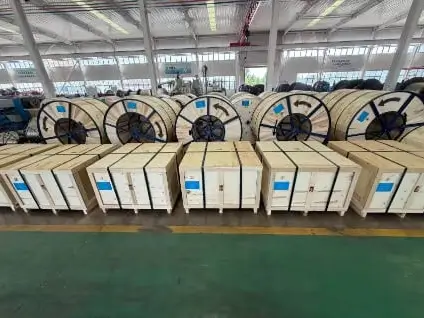
The safest way to compare 33kV cable prices is to convert every supplier quotation into the same technical comparison sheet.
| Specification | Supplier A | Supplier B | Supplier C |
|---|---|---|---|
| Voltage designation | |||
| Applicable standard | |||
| Core configuration | |||
| Conductor material | |||
| Conductor cross-section | |||
| XLPE insulation | |||
| Metallic screen | |||
| Armour | |||
| Outer sheath | |||
| Testing/documentation | |||
| Quantity | |||
| Delivery / Incoterm | |||
| Quoted price |
This approach prevents a common procurement mistake: comparing the lowest numerical price before confirming that the suppliers are actually quoting the same cable.
A fixed online price can be misleading when the technical specification and commercial basis are not fixed.
A 33kV cable quotation can change according to conductor material and size, cable configuration, screen and armour requirements, sheath specification, testing scope, quantity, packaging and delivery conditions.
For this reason, a project-specific quotation is more useful than an artificial “average price.” If you already have a cable datasheet, BOQ, technical specification or previous supplier quotation, sending that information allows the supplier to quote against an identifiable cable design.
The more clearly the technical basis is defined, the easier it is for different manufacturers to return comparable quotations.
System voltage, frequency, voltage designation and required electrical performance.
Copper or aluminium, cross-section and conductor construction.
Single-core or three-core, insulation, screens, armour and sheath.
Buried, duct, tray or other installation method and relevant conditions.
Short-circuit requirements and applicable duration where established.
Required testing, inspection and technical documentation.
Total length, required drum configuration and packaging requirements.
Destination, delivery basis, Incoterm and required delivery schedule.
Avoid budget discrepancies. Share your technical data sheet, required conductor cross-section, and delivery terms with our engineering team for a firm, transparent quotation aligned with real-time LME metal indices.
Before comparing numbers, confirm exactly what the supplier’s price includes.
| Commercial Item | Confirm Before Comparing |
|---|---|
| Cable price basis | Per metre, per drum or total order basis |
| Cable construction | Complete technical specification and datasheet |
| Testing | Included testing and documentation |
| Packaging | Drum and packaging requirements |
| Delivery | Destination and delivery basis |
| Commercial terms | Incoterm, payment and other agreed commercial conditions |
Price per metre is only one line in a cable procurement decision.
A procurement team should also check whether the quotation satisfies the required technical construction, testing, documentation, packaging and delivery conditions.
A lower headline price may not represent a lower procurement cost if the quotation excludes requirements that another supplier has included. Conversely, a higher price should not automatically be treated as superior. The first step is to establish technical equivalence.
This is why a good 33kV cable quotation should be reviewed together with its technical datasheet and construction description.
| Term | Practical Definition |
|---|---|
| 33kV XLPE cable price | The quoted commercial rate based on a fully defined 33kV cable construction manufactured to IEC 60502-2 or IEC 60840 standards, including specific raw material index bases (LME) and delivery scope. |
| Cable quotation | A supplier’s commercial offer based on stated technical specifications, quantity and commercial conditions. |
| Technical equivalence | A condition in which competing quotations satisfy the same relevant technical requirements and performance basis. |
| XLPE insulation | Cross-linked polyethylene used as the electrical insulation system in the specified cable construction. |
| Metallic screen | A metallic component of the cable construction whose material and dimensions are defined according to the applicable design and requirements. |
| Ampacity | The allowable continuous current calculated for a specified cable construction and installation basis. |
| Like-for-like quotation | A comparison in which suppliers quote against the same relevant technical and commercial requirements. |
| Project-specific quotation | A quotation prepared from the actual project cable specification, quantity, delivery and documentation requirements. |

For a 33kV project, the useful starting point is a clear technical specification that the manufacturer can review and quote against.
Huanghe Cable is a cable manufacturer established in 1980, supplying power cables and supporting project-specific cable requirements for international customers.
For 33kV enquiries, the quotation process can start from the customer’s existing datasheet, BOQ, technical specification, cable schedule or previous supplier quotation. Where the specification is incomplete, the technical requirements can be clarified before the final quotation is prepared.
Depending on the project requirements, buyers can also specify the applicable standards, testing and inspection documentation required for the order. Huanghe supports technical documentation and project-specific cable manufacturing requirements for procurement teams and contractors.
The price depends on the complete cable specification and commercial basis. Conductor material and size, core configuration, insulation and screening system, metallic screen, armour, sheath, testing, quantity, drum requirements and delivery conditions can all affect the quotation. A reliable project price should therefore be requested against the complete specification rather than a generic per-metre figure.
Because the cable size alone does not define the complete product. Suppliers may be quoting different conductor materials, cable configurations, screen constructions, armour, sheath specifications, testing scope or commercial conditions. First check technical equivalence before comparing the numerical prices.
Yes, conductor material is an important quotation input. Copper and aluminium have different material costs and electrical characteristics. However, the comparison should consider the complete required electrical performance and conductor cross-section rather than comparing copper and aluminium only by nominal size.
There is no universal price rule based only on core configuration. Single-core and three-core cables have different constructions and project applications. The quotation must be based on the actual required design, conductor configuration, screen, sheath, armour and other specifications.
IEC 60502-2 is the primary international standard governing power cables with rated voltages from 6kV (Um = 7.2kV) up to 30kV (Um = 36kV), which explicitly includes 33kV systems (rated 19/33kV). For specialized high-voltage utility projects, renewable integration, or extended type-testing requirements, IEC 60840 (Um > 36kV up to 170kV) may also be specified by the consulting engineer.
You can request a preliminary indication, but it is not enough for a reliable project quotation. The supplier should also know the conductor material, cable configuration, voltage designation, screen, armour, sheath, applicable standard, testing, quantity and delivery requirements.
Only after confirming that the quotations are technically equivalent. Compare the complete cable construction, performance requirements, testing, quantity and commercial scope before using price per metre as a procurement comparison.
Send the available technical specification, cable schedule, BOQ or datasheet together with quantity and delivery information. If available, include voltage designation, conductor material and size, core configuration, metallic screen, armour, sheath, installation conditions, fault requirements, applicable standards, testing requirements and destination.
There is no meaningful universal “33kV XLPE cable price” without a defined cable specification.
For procurement teams, the practical approach is to define the voltage rating, conductor, core configuration, XLPE insulation system, metallic screen, armour and sheath requirements, installation basis, fault requirements, testing, quantity and delivery conditions before comparing supplier prices.
Once suppliers are quoting the same technical and commercial basis, the resulting quotations become much easier to compare. If your project specification is incomplete, send the information you already have and ask the cable manufacturer to identify the remaining technical inputs before final pricing.
Need a project-specific 33kV XLPE cable quotation?
Send your cable specification, BOQ, datasheet or required quantity. Huanghe Cable can review the available information and confirm the technical details needed for quotation.

Please contact us for a free quotation by the below form. We promise the quickest response within 12 hours.