For contractors, electrical distributors, utility projects and industrial procurement teams, selecting a YJLY23 cable manufacturer in China involves more than comparing prices. Buyers need to confirm the rated voltage, conductor cross-section, number of cores, cable construction, applicable standard and delivery requirements before placing an order.
Huanghe Cable manufactures power cables for low-voltage and medium-voltage applications. Based on the project requirements, buyers can enquire about aluminum conductor power cables with XLPE insulation, steel tape armour and a polyethylene outer sheath. For single-core designs, the maximum conductor cross-section available from Huanghe typically reaches up to 400 mm² (or customized up to larger sizes subject to engineering review); the applicable voltage rating and construction should be confirmed for each order.
Among enquiries from emerging infrastructure markets such as Mongolia, Central Asia, and Southeast Asia, 10kV-class and 8.7/15kV cable requirements are particularly common. This article explains the commonly used YJLY23 construction, industry reference specifications, the information required for a quotation and the key points to confirm when sourcing cables for low-voltage and medium-voltage power projects.
Looking for a YJLY23 Cable Supplier?
Send your cable schedule, rated voltage, conductor size, number of cores, quantity and destination. Huanghe Cable can review the requested configuration and confirm the applicable supply options.
Quick Definition for Engineers & Buyers:
YJLY23 is an IEC-compliant power cable designation representing an Aluminum conductor, XLPE insulated, Steel Tape Armoured (STA), and Polyethylene (PE) outer-sheathed power cable. It is widely engineered for low-voltage (0.6/1kV) and medium-voltage (up to 15kV) underground distribution networks, offering high mechanical protection and cost-effective performance for infrastructure projects.
The model designation provides a useful description of the basic cable construction, but it does not specify every detail required for an order. The rated voltage, conductor cross-section, number of cores, conductor construction, insulation design, sheath requirements, testing scope and applicable standard must still be confirmed.
📌 YJLY23 Construction at a Glance:
Voltage range: Low-voltage and medium-voltage configurations, subject to product design and applicable standards.
For buyers who already have a technical specification, the model name should be checked against the complete construction description. If a tender uses a different standard or model naming convention, send the original document to the supplier instead of relying on the model abbreviation alone.
YJLY23 enquiries may cover different rated voltages and cable configurations. Low-voltage projects generally require different conductor-size and core combinations from medium-voltage distribution networks. The correct design depends on the system voltage, project specification, load calculation, installation method and applicable cable standard.
Huanghe Cable’s YJLY23 enquiries cover low-voltage and medium-voltage requirements. Standard manufacturing ranges cover common industrial requirements up to 400 mm² (with larger sizes subject to special technical evaluation). Each combination must be confirmed against the required design and production scope.
For low-voltage power distribution, the common rated voltage is 0.6/1kV. Depending on the product design and applicable standard, low-voltage cables may be available in single-core and multicore configurations (including common asymmetric composite core arrangements such as 3+1, 3+2, and 4+1 for three-phase distribution). Typical conductor cross-sections vary according to the number of cores, cable construction and manufacturer’s range.
When enquiring about low-voltage YJLY23, buyers should specify whether they need a single-core cable or a multicore cable, together with the conductor size, quantity and installation conditions. The number of cores and cross-section should be taken from the project’s approved design rather than selected solely from a general catalogue.
Core Configurations Note for Low-Voltage Projects: For low-voltage YJLY23 distribution cables, standard and customized core combinations—such as 2+1, 3+1, 3+2, and 4+1 (incorporating reduced neutral or earth cores)—are frequently required by project cable schedules. Buyers should ensure that the exact cross-section ratio between the main phase conductors and the auxiliary (neutral/earth) cores is clearly specified in their technical requirements.
Medium-voltage cable orders require strict adherence to rated voltage, insulation thickness, and international manufacturing standards. For medium-voltage YJLY23 cables, production and testing are typically governed by IEC 60502-2, which specifies the construction requirements for power cables with extruded solid insulation from 6 kV up to 30 kV.
For projects described as 10kV, confirm the actual cable rated voltage specified in the engineering documents. An 8.7/15kV rating is expressed as U0/U, in accordance with IEC 60502-2 where U0 is the rated power-frequency voltage between conductor and earth, and U is the rated voltage between conductors. These designations should not be treated as interchangeable without checking the system and project requirements.
For Mongolian projects where 10kV-class and 8.7/15kV enquiries are frequent, it is useful to send the rated voltage, core configuration, conductor cross-section and required standard together. This helps the supplier assess the requested design before preparing a quotation.
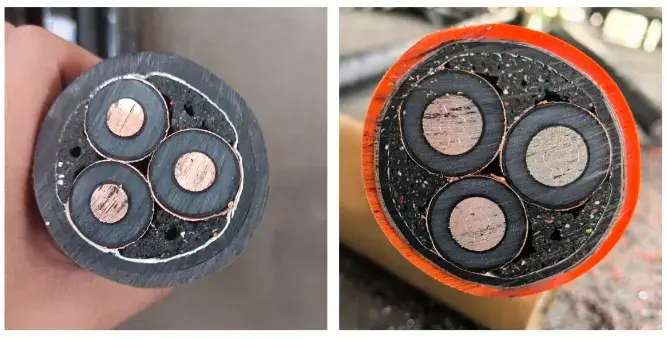
The following table summarizes common industry reference configurations for XLPE-insulated aluminum conductor power cables. It is intended as a preliminary reference for procurement discussions, not as a confirmed Huanghe Cable catalogue or a guarantee that every combination is available.
Specification note
The ranges below are indicative industry references. Actual availability depends on the rated voltage, conductor class, number of cores, cable design, applicable standard and manufacturer. Confirm the exact YJLY23 configuration before ordering.
| Rated voltage reference | Common core configurations | Indicative conductor cross-sections | Important note |
|---|---|---|---|
| 0.6/1kV (Low Voltage) | 1, 2, 3, 4 or 5 cores, or 2+1, 3+1, 3+2, 4+1 cores | Common industry references include 1.5–400 mm² for standard designs; multicore ranges are generally more limited | Confirm conductor size, core arrangement, and neutral/earth ratio against project specifications. |
| 1.8/3kV & 3.6/6kV | 1 or 3 cores | Industry examples include medium cross-sections beginning around 25 mm² up to 400 mm² | Confirm insulation design, conductor screen and applicable standard. |
| 6/10kV | 1 or 3 cores | 35, 50, 70, 95, 120, 150, 185, 240, 300 and 400 mm² | Verify system voltage and short-circuit rating requirements. |
| 8.7/15kV (10kV/15kV Class) | 1 or 3 cores | 35, 50, 70, 95, 120, 150, 185, 240, 300 and 400 mm² | For single-core MV cables, ensure proper consideration of metallic screen and non-magnetic armor (if applicable). |
| 12/20kV & 18/30kV (20kV & 35kV Class) | 1 or 3 cores | 50 mm² to 400 mm² (dependent on specific manufacturing design) | Requires specialized insulation thickness review; confirm project design parameters prior to quotation. |
In the table, the listed cross-sections are examples of commonly encountered industry sizes, not a statement that every size is available at every voltage or core count. A 1-core cable and a 3-core cable at the same rated voltage can have different practical size ranges and construction requirements.
For Huanghe Cable, the confirmed capability provided for this article is that YJLY23 supply covers low-voltage and medium-voltage requirements, with single-core conductor cross-sections up to 800 mm². Buyers should send their exact combinations for confirmation before treating any particular size as available.
Across the power cable industry, common nominal conductor cross-sections include:
These are standard nominal cross-section values commonly stocked and manufactured for power cable projects. For requirements exceeding 400 mm² or special non-standard sizes, technical parameters and manufacturing feasibility must be specially reviewed against project specifications.
💡 Need help matching your project’s cable schedule?
Don’t guess the size or construction. Send your project’s Bill of Quantities (BOQ) directly to our engineering team for a free technical compliance review.
Request Your Project Review & Quote →Choosing the right cable begins with the project specification. A model name alone is not enough to determine the correct rated voltage, conductor size or number of cores.
Start with the rated voltage specified by the electrical design. For medium-voltage projects, distinguish the system voltage description from the cable’s U0/U rating. If the project documents state 10kV, confirm the cable rating required by the design rather than assuming a particular rating.
The conductor cross-section should be based on the project’s load, installation conditions, allowable voltage drop, short-circuit requirements and applicable design rules. Current-carrying capacity cannot be determined from conductor size alone: installation method, ambient conditions, grouping and soil thermal properties can affect the result.
For a deeper technical breakdown of how installation environments, soil thermal resistivity, and grouping factors affect current ratings, you can also review our detailed guide on Power Cable Ampacity: 9 Factors That Change Current Rating Under IEC 60287.
Single-core and multicore cables differ in construction, overall dimensions and practical cross-section ranges. The number of cores should match the system arrangement and approved cable schedule. Do not assume that a cross-section available in a single-core cable is automatically available in a three-core version at the same voltage rating.
YJLY23 commonly uses steel tape armour and a PE outer sheath. Buyers should verify whether this construction is appropriate for the intended installation route and environmental conditions. Direct burial, ducts, trenches and other routes may involve different mechanical and installation considerations.
State the applicable cable standard in the enquiry and identify any required routine tests, additional tests, third-party inspection or documentation. If the project uses a particular national or international specification, include it in the enquiry so the manufacturer can review the requirement against the proposed cable design.
The aluminum conductor is a defining feature of the YJLY23 model. Buyers should confirm the nominal cross-section and conductor construction required by the project. When comparing aluminum and copper cable quotations, compare cables designed for the same electrical duty and installation conditions rather than comparing conductor sizes or prices in isolation.
Cross-linked polyethylene insulation is widely used in low-voltage and medium-voltage power cables. For medium-voltage applications, the insulation system and related electrical design must match the specified rated voltage and applicable standard. The insulation requirements should be confirmed through the approved technical specification and test documentation.
Steel tape armour provides a mechanical protection layer. Its suitability depends on the installation environment and the mechanical requirements of the project. Buyers should confirm the armour type and cable construction with the manufacturer, particularly where installation includes pulling, bending or other mechanical stresses.
The PE outer sheath is another key element of the common YJLY23 construction. PE and PVC are different sheath materials with different properties. The required material should be stated explicitly in the purchase specification, along with any project requirements for environmental exposure or installation conditions.
When evaluating a cable manufacturer, procurement teams should look beyond the model description and quotation. The manufacturer’s ability to review the specification, manufacture to the agreed requirements and provide the agreed inspection documentation is also important.
Huanghe Cable was founded in 1980 and manufactures power cables for project and distribution requirements. For a YJLY23 order, the production and inspection requirements should be agreed according to the cable design, applicable standard and purchase contract.
Before confirming an order, buyers can discuss the following points with the supplier:
Inspection arrangements should be agreed before production or shipment. Certification and test documentation should be checked for relevance to the actual product, standard and order; buyers should not assume that a document for one cable type automatically covers every other model.
For additional information about Huanghe’s product range, visit the XLPE Power Cable product page.
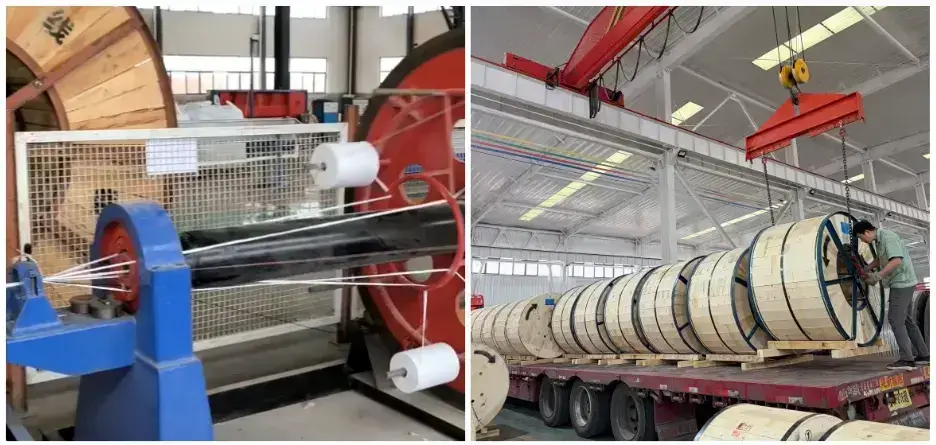
The price of a YJLY23 cable depends on the exact product configuration and order conditions. A quotation for one voltage rating or core arrangement cannot automatically be applied to another cable with a different conductor size or construction.
When requesting a quotation, provide the following information:
When comparing suppliers, check that the quoted products have the same rated voltage, conductor material and cross-section, core number, armour, sheath, testing scope and delivery basis. A lower price may reflect a different specification or a different scope of supply.
Request a YJLY23 Cable Quotation
Have a cable schedule or bill of quantities? Send the document with the required voltage, core configuration, conductor size, quantity and delivery destination for a project-specific review.
YJLY23 commonly refers to an aluminum conductor power cable with XLPE insulation, steel tape armour and a PE outer sheath. The exact rated voltage, core configuration and detailed construction must be specified separately.
YJLY23 is used in different voltage-rated product configurations, depending on the manufacturer and applicable standard. The rated voltage and construction must be confirmed for the specific order. Do not assume that every YJLY23 design covers every voltage level.
Standard production for YJLY23 power cables covers common industrial sizes up to 400 mm² for both low-voltage and medium-voltage ranges. For any ultra-large conductor requirements exceeding this range, detailed project specifications and engineering review are required prior to order confirmation.
Common industry conductor sizes include 25, 35, 50, 70, 95, 120, 150, 185, 240, 300 and 400 mm², with larger single-core options available in some designs. The actual range depends on rated voltage, core number, applicable standard and manufacturer. Confirm the exact combination before ordering.
Under common Chinese model conventions, YJLY23 indicates an aluminum conductor, XLPE insulation, steel tape armour and PE outer sheath. YJV22 commonly indicates a copper conductor, XLPE insulation, steel tape armour and PVC outer sheath. Check the model definitions and technical specifications used in the relevant standard or tender before confirming an order.
Provide the cable model, rated voltage, number of cores, conductor cross-section, applicable standard, order quantity, drum-length requirements and delivery destination. A technical datasheet, cable schedule or bill of quantities can help the supplier review the order accurately.
Yes. Include the exact rated voltage stated in the project documents, along with the required core configuration, conductor cross-section and quantity. If the enquiry describes the cable only as “10kV,” provide the project specification so the required cable rating can be confirmed.
Submit the requested cable construction, rated voltage, conductor size, core number and applicable standard for review. The manufacturer can then confirm whether the required configuration is available and identify any technical details that need clarification.
Agree on the product specification, applicable standard, required tests, inspection scope and documentation before production. Review the inspection and test records for the actual order, and confirm any third-party inspection arrangements in advance.
Huanghe manufactures YJLY23 cables in accordance with international standards such as IEC 60502-1 (for low-voltage) and IEC 60502-2 (for medium-voltage). Ampacity values provided in preliminary datasheets are based on standard reference installation conditions; however, final cable sizing should always be verified by the project’s electrical engineer considering site-specific grouping, ambient temperature, and soil thermal resistivity.
If you are sourcing YJLY23 cable for a low-voltage or medium-voltage project, provide the exact rated voltage, core number, conductor cross-section, quantity and delivery destination. For single-core designs requiring large conductor sizes, state the required cross-section clearly so the product configuration can be reviewed.
Huanghe Cable can review project enquiries based on the information provided and confirm the applicable supply options. For a faster technical review, include your cable schedule, bill of quantities or project datasheet.
Discuss Your YJLY23 Cable Requirements
Share your technical specification and delivery requirements to start a project quotation review.
Submit Your Enquiry
Please contact us for a free quotation by the below form. We promise the quickest response within 12 hours.