🔧 Huanghe Cable | Products & Technical Guides | Copper vs Aluminum Power Cable | Cable Procurement
⏱️ Estimated reading time: 17 minutes
Key Takeaways
When purchasing power cables, one of the first questions often asked by procurement teams is simple: Should we use copper or aluminium conductors?
Copper is widely recognized for its high electrical conductivity and compact conductor size, while aluminium is lighter and is commonly used where weight and material cost are important considerations. Both materials are established conductor choices for power cable systems.
The problem starts when buyers compare them only by price per metre or assume that a copper cable and an aluminium cable with the same cross-sectional area are technically equivalent.
They are not.
A change from copper to aluminium can affect the required conductor cross-section, cable diameter, weight, electrical resistance, voltage drop, termination method and installation requirements. For larger projects, these differences can also affect transportation, cable pulling and accessory selection.
This guide explains nine practical engineering checks to make before ordering copper or aluminium power cables, so procurement teams can compare quotations on a technically consistent basis.
Table of Contents
The first technical difference between copper and aluminium is electrical conductivity.
Copper has higher electrical conductivity than aluminium. This means that, for the same conductor cross-sectional area and under comparable conditions, a copper conductor has lower electrical resistance.
This difference is important because conductor resistance affects several cable characteristics, including power losses and voltage drop.
For procurement purposes, the important point is that conductor material and conductor cross-section must be considered together.
| Engineering Metric | Copper Conductor (Cu) | Aluminium Conductor (Al) | Procurement Impact |
|---|---|---|---|
| Electrical Conductivity | 100% IACS | ~61% IACS | Al requires 1-2 sizes larger cross-section |
| Short-Circuit k-Factor (XLPE) | k = 143 | k = 94 | Cu withstands higher fault current per mm² |
| Material Density | ~8.89 g/cm³ | ~2.70 g/cm³ | Al reduces shipping weight & conduit load |
| Termination Requirement | Standard Cu Lugs | Bimetallic (Cu-Al) Lugs | Mandatory for Al to avoid galvanic corrosion |
For a cable project, these properties should be evaluated against the required electrical performance rather than treated as isolated advantages.
One of the most common procurement mistakes is comparing a copper cable and an aluminium cable with the same nominal conductor area and assuming that they provide the same electrical performance.
For example, a 240 mm² copper conductor and a 240 mm² aluminium conductor have the same nominal geometric cross-sectional area, but their electrical resistance and weight are different.
If the project requires a particular current-carrying capacity or voltage-drop performance, the engineer may need to select different conductor sizes for copper and aluminium.
Therefore, when comparing quotations, use the following sequence:
The correct comparison is therefore not simply “240 mm² Cu versus 240 mm² Al”. It is whether each proposed cable satisfies the same project requirements.
Current-carrying capacity, or ampacity, is one of the most important parameters when selecting a power cable.
The allowable current depends on more than the conductor material. Cable construction, insulation, installation method, ambient or soil conditions, grouping and other thermal factors can affect the final value.
This means that a datasheet’s ampacity figure should never be copied into an RFQ without checking the conditions behind the value.
Procurement tip: When comparing copper and aluminium cables, ask each manufacturer to state the installation conditions used for the published current rating. Two apparently similar cables may have different ampacity values because their calculation assumptions differ.
For engineering calculations, cable current ratings are normally determined in accordance with the applicable standard and installation conditions. IEC 60287 provides calculation methods for steady-state current ratings and losses of cables under specified conditions.
For an international project, the final conductor selection should therefore be based on the project’s design calculation and the manufacturer’s verified cable data.
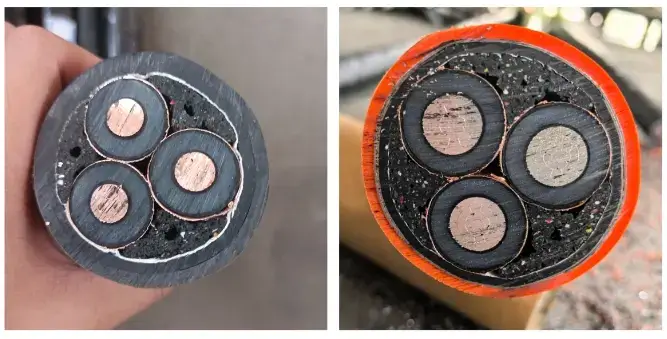
Voltage drop becomes particularly relevant when a power cable runs over a long distance or operates at a relatively high load.
Because copper generally has lower electrical resistance than aluminium for the same cross-sectional area, conductor material can influence the voltage-drop calculation.
For a three-phase AC system, the line-to-line voltage drop (ΔVL-L) is calculated using the following formula:
ΔVL-L ≈ √3 × I × L × (RAC cosφ + X sinφ)
Where:
For long cable routes, the engineer may find that a larger aluminium conductor is needed to achieve the required electrical performance. This does not necessarily mean that aluminium is unsuitable; it means the conductor size must be selected based on the actual design requirements.
If your project includes long feeders, include the route length, design current and power factor in the cable RFQ. This gives the manufacturer enough information to provide meaningful electrical data.
Normal operating current is only one part of cable sizing. The cable must also withstand the thermal and mechanical effects associated with short-circuit conditions.
For conductor short-circuit thermal withstand sizing under a specified fault duration, the adiabatic formula according to IEC 60865-1 / IEC 60364-5-54 is applied:
Isc² · t = k² · S² ⇒ S = (Isc · √t) / k
Where:
For MV cables, the metallic screen also deserves attention. The screen may have to carry a specified fault current for a specified duration, depending on the system earthing arrangement and project requirements.
When changing from copper to aluminium, do not evaluate only the continuous current rating. Confirm the complete short-circuit calculation for the proposed conductor and cable construction.
One of aluminium’s practical advantages is its lower density compared with copper. This can significantly affect the weight of a long cable shipment.
However, the lighter conductor does not mean that the complete aluminium cable will always have a proportionally smaller diameter. If a larger conductor cross-section is required to achieve equivalent electrical performance, the overall cable construction may become larger.
For procurement and installation planning, request the complete cable data rather than estimating from conductor material alone.
| Physical parameter | Why procurement should check it |
|---|---|
| Cable weight | Affects transportation, drum handling and installation equipment |
| Overall diameter | Must fit ducts, trays and cable routes |
| Bending radius | Affects cable installation and routing |
| Drum length | Affects logistics, joints and installation planning |
For long-distance infrastructure projects, the difference in cable weight can also influence the type of transportation and lifting equipment required at site.
Conductor selection can affect cable installation, particularly for large cross-sections and long cable routes.
Aluminium’s lower density can be advantageous where large quantities of cable need to be transported and installed. At the same time, the cable design and conductor construction must be considered when calculating pulling forces and bending requirements.
For underground installations, review:
The installation method should also be included when asking a manufacturer to confirm cable ampacity. A cable designed for direct burial, duct installation or tray installation may require different thermal assumptions.
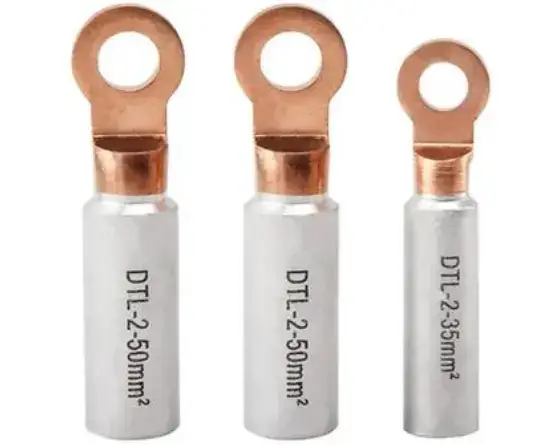
Changing conductor material also means reviewing the cable accessories used at the ends of the cable and at cable joints.
Cable lugs, terminals, joints and termination kits must be suitable for the conductor material and the specific cable construction.
This is critical when connecting aluminium conductors to copper equipment terminals or busbars. Direct physical contact between copper and aluminium in the presence of moisture triggers severe galvanic corrosion and increased contact resistance due to rapid aluminium oxidation. Terminations between aluminium cables and copper terminals must utilize bimetallic lugs (friction-welded Cu-Al lugs) or transition plates, applied with joint compound (anti-oxidant paste), to ensure long-term connection integrity and prevent thermal failure.
For MV cable projects, accessory selection becomes even more important because the termination or joint must match the cable’s insulation, screen and conductor configuration.
Procurement tip: If you change the conductor material after the cable specification has already been approved, review the cable accessories at the same time. A lower cable material cost can create installation problems if the accessory specification is not updated.
The final decision between copper and aluminium should always be made within the framework of the applicable cable standard and project specification.
For international engineering procurement, power cable designs and calculations should strictly comply with applicable international standards:
When requesting a quotation, ask the manufacturer to clearly state:
A complete specification makes it much easier to determine whether two copper and aluminium cable quotations are genuinely comparable.
Not Sure Which Conductor Material Fits Your Project?
Send your existing cable specification, load information or supplier datasheet to Huanghe Cable. We can help identify the main technical parameters that should be compared before you finalize the cable quotation.
Once you receive quotations from different cable manufacturers, do not compare the copper and aluminium offers by unit price alone.
A proper comparison should normalize the technical specifications first.
| Comparison Item | What to Verify |
|---|---|
| Conductor | Copper or aluminium, class and construction |
| Cross-section | Nominal conductor area and whether it meets the design requirement |
| Resistance | Manufacturer’s declared resistance under the applicable standard |
| Current rating | Ampacity and calculation conditions |
| Voltage drop | Suitability for actual route length and load |
| Short circuit | Conductor and screen withstand where applicable |
| Cable dimensions | Overall diameter, weight and bending radius |
| Accessories | Lugs, joints and termination compatibility |
| Standards | Applicable IEC or project-specific requirements |
Only after the technical basis has been confirmed should the procurement team compare the commercial offer.
For large projects, it can also be useful to compare the total installed cost rather than cable price alone. Transportation, drums, accessories, installation equipment and labour may all contribute to the final project cost.
If you are requesting quotations from several manufacturers, provide enough information for every supplier to quote against the same technical basis.
Cable type: LV / MV power cable
Voltage rating: [required rating]
Number of cores: [number]
Conductor: Copper / Aluminium
Cross-section: [mm²]
Insulation: [XLPE / PVC / other]
Metallic screen: [if applicable]
Armour: [SWA / STA / AWA / other]
Sheath: [PVC / PE / other]
Installation: [direct burial / duct / tray / other]
Route length: [m / km]
Load current: [A]
Applicable standard: [IEC / BS / project specification]
Required documentation: [datasheet / drawings / test reports / certificates]
If you are still deciding between copper and aluminium, include the design load and installation conditions in the RFQ. This allows the cable manufacturer to propose a technically appropriate conductor size instead of simply pricing the same nominal cross-section in two different materials.

Huanghe Cable is a cable manufacturer established in 1980, producing power cables for domestic and international applications.
The company’s product range includes low-voltage and medium-voltage power cables using copper and aluminium conductors, with different insulation, screen, armour and sheath constructions according to project requirements.
Huanghe Cable supports customized cable specifications and can discuss conductor material, cross-section, insulation, metallic screen, armour and sheath requirements according to the application and applicable standard.
The company manufactures cables in accordance with relevant IEC requirements and has IEC/CB-related certification and testing experience, together with CCC and ISO qualifications. Third-party inspection requirements can also be discussed according to the project.
For procurement teams comparing copper and aluminium cable suppliers, the most useful starting point is to provide the complete technical specification and installation conditions. This allows the manufacturer to confirm the proposed cable construction and electrical data before production.
Need a Copper or Aluminum Power Cable Quotation?
Send your cable requirements, project specification or existing supplier datasheet to Huanghe Cable. We can review the main technical parameters and prepare a quotation based on your requirements.
Neither material is automatically better for every project. Copper has higher electrical conductivity, while aluminium has lower density and can be suitable for applications where conductor weight and overall project economics are important. The correct choice depends on the required electrical performance, installation conditions, accessories and project specification.
No. Due to aluminium’s lower conductivity (approx. 61% of IACS), an aluminium conductor generally requires a cross-section 1 to 2 standard sizes larger than copper to achieve equivalent current-carrying capacity (ampacity) and manage voltage drop within acceptable design limits.
Aluminium has a much lower density than copper. As a result, an aluminium conductor of a given cross-sectional area weighs less than a copper conductor of the same area. The complete cable weight, however, also depends on insulation, screen, armour and sheath construction.
The termination system must be suitable for the conductor material and cable construction. When aluminium conductors are connected to equipment with copper terminals, appropriate compatible accessories and installation procedures should be used.
The answer depends on the system design. Long cable routes require careful consideration of resistance, voltage drop, current rating, installation conditions and short-circuit requirements. Aluminium can be a practical option for many power distribution applications, but the conductor size must be selected based on the actual engineering calculation.
Yes. Huanghe Cable supplies power cable constructions using both copper and aluminium conductors and supports customized specifications according to project requirements and applicable standards.

Please contact us for a free quotation by the below form. We promise the quickest response within 12 hours.